



One might nearly be forgiven for forgetting that Chimananda Ngozie Adichie is a novelist. Properly over a decade has handed since she printed the most effective vendor Americanah, a few younger Nigerian lady’s confrontation with race and identification, which rapidly secured a spot within the modern canon. The novel elevated Adichie to uncommon literary stardom—onto the duvet of British Vogue, right into a Beyoncé music. She continued to jot down however caught to nonfiction—lengthy essays on feminism and, extra just lately, on grief. But apart from a number of quick tales, she wasn’t producing a lot fiction. Once I requested her throughout an interview two years in the past concerning the lengthy await a brand new novel, she mentioned the query made her “go right into a panic.”
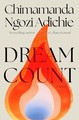
The drought—which is how she sees it—is now over. Dream Rely, her new novel, is about 4 African girls—together with three who share Adichie’s Nigerian background—and their love lives. The ebook’s central occupation is a severe one: how males have an effect on the existences of girls, both as damaging forces, objects of longing, or distractions from girls’s goals.
Chiamaka is a journey author holding out for somebody who will make her really feel “really recognized”; Zikora, her greatest buddy, is a lawyer who badly desires to quiet down and begin a household; Omelogor, Chiamaka’s cousin, is a profitable banker in Nigeria who rejects all stress to stay a standard life; and, lastly, Kadiatou, the ebook’s most attention-grabbing and authentic character, is a Guinean housekeeper who works for Chiamaka, tries to construct a brand new life in America and finds herself the sufferer of a strong and predatory man.
Adichie spoke with me within the days earlier than the novel’s publication. I used to be curious to listen to concerning the characters but in addition about how Adichie sees the US proper now. In her normal outspoken approach, she had a lot to say about masculinity, Donald Trump, and the way in which that politics is skewing artwork.
This interview has been condensed and edited for readability.
By Chimamanda Ngozi Adichie
Gal Beckerman: Nearly all of the writing you’ve printed over the previous decade has been nonfiction, like your essay We Ought to All Be Feminists. Fiction presents you, as you mentioned in your creator’s notice to Dream Rely, an opportunity to discover complexities. How does it really feel to be again in that fiction mode?
Chimamanda Ngozi Adichie: I’ve all the time needed to be in that mode, so not being in it was exhausting. That expression, “author’s block,” is one I don’t like, nevertheless it speaks to what it was: an incapability to jot down fiction. I had that for a number of years, and I simply keep in mind being terrified. I don’t know how you can be average in enthusiastic about my very own creativity. And so, actually, what it felt like after I couldn’t write fiction was: I felt like I used to be shut out of myself. As a result of fiction is the factor that provides that means to me. It simply provides me pleasure.
Beckerman: I needed to learn you a quote from a 2016 interview you gave that I feel is a sort of keystone for understanding the larger themes of Dream Rely: “Put a bunch of girls collectively, and the dialog will finally be about males. Put a bunch of males collectively, and they won’t speak about girls in any respect … We ladies ought to spend about 20 % of our time on males, as a result of it’s enjoyable, however in any other case, we also needs to be speaking about our personal stuff.” The 4 girls on this ebook are every contending with the boys of their lives, and males who’re principally doing harm to them.
Adichie: I may need to revise that quantity: perhaps extra like 15 or 18 %. I ought to say that that’s extra about what I want the world could be than about what the world is. And I feel that fiction, if nothing else, must be trustworthy. It must be unforgivingly trustworthy. And I don’t wish to write about girls’s lives as I want they had been. So, for instance, I do know many ladies who, their relationships from the surface, it’s very clear to me, and I feel to most individuals, that it’s an unhealthy relationship. However I’m all the time thinking about how girls justify to themselves remaining in these relationships. Somebody truly simply mentioned to me that each one the boys within the ebook are jerks.
Beckerman: I used to be about to say that too!
Adichie: Actually? I really feel like I’ve been grossly misunderstood. Good Lord, come on. There’s one which we would argue will not be essentially the most interesting of males. However even [him], I feel, we might view with some empathy. However I really feel like the opposite males are usually not jerks. I suppose if I’m listening to it this usually, it should imply there may be some reality to it.
Beckerman: It does appear that what issues extra within the ebook is the way in which their actions find yourself affecting every of the 4 girls.
Adichie: I’d argue that heterosexual girls’s lives are, the truth is, formed very often by males. Ladies are sometimes socialized from childhood to be good in a approach that boys are usually not socialized to be good. You already know, it’s girls in relationships who nearly unconsciously make compromises and sacrifices; we’re usually taught that love is self-sacrifice, and that makes us really feel ashamed to consider ourselves. Males wouldn’t have the identical sort of worry of penalties in the event that they’re egocentric. I don’t even know if it happens to males.
Beckerman: I do know you don’t suppose all the boys had been jerks, however whereas I used to be studying, the thought of a sure aggressive, careless, damaging masculinity was inescapable, particularly at a second when American politics and tradition have been overtaken by what one author in our pages simply referred to as an “Adolescent Fashion.” Do you suppose this novel has one thing to say concerning the specific type of what is likely to be referred to as immature patriarchy that we’re residing beneath proper now?
Adichie: I feel that lots of the girls in my ebook do, the truth is, escape masculinity—if not escape, then they’ve discovered methods to type of push it to the facet. Actually, simply enthusiastic about what is going on on this nation, it feels as if America is now not America. It feels to me a disservice to my novel to attempt to speak concerning the masculinity of my beloved characters alongside this confederacy of dunces.
Beckerman: However I do really feel like, studying this proper now, there was one thing that echoed with our instances.
Adichie: I’d truly say that the actions of the Trump administration really feel extra like these of toddlers, not males. How they’re appearing doesn’t really feel manly. I feel I wish to make a distinction between manly and masculinity. So there’s a sort of ugly, masculine power, nevertheless it’s not a manly power. I feel to be manly is to point out maturity, accountability—and there’s none of that. However what I’ve been enthusiastic about extra on this novel, as in all my work, is love. I’m a hopeless romantic who hides it behind sarcasm. I keep in mind a number of weeks in the past considering that what we’re witnessing from Trump is definitely from a scarcity of affection. So you can’t love a rustic and deal with it with such careless recklessness, you simply can not.
Beckerman: Once you say that America doesn’t really feel like America anymore, how does that have an effect on how you consider your position as a author?
Adichie: I’m nonetheless slightly bit dizzy. It’s been a month, and simply a lot has occurred. However generally, I wish to make a distinction between myself the author and myself the citizen. Sure, in fact, political points do inform my fiction, however I hope that I by no means let it both propel or change into a hindrance to my writing. I consider my writing as one thing that’s fairly separate from my political self, if that is sensible. Which isn’t to say they aren’t intertwined, as a result of most of my fiction is political. As a citizen, issues have modified for me. I imply, it’s a must to do not forget that I come from Nigeria, the place, rising up, America was the place the place the whole lot went the way in which it was alleged to go. And the truth is that Nigeria and the U.S. are the identical now. Somebody mentioned to me, “Are you enthusiastic about transferring again to Nigeria?” Properly, no, as a result of it’s the identical.
Beckerman: Nigeria moved to you.
Adichie: The one distinction is that I don’t have to make use of my generator as a lot right here within the U.S. In Nigeria at this time, we have now a president who, in my view, was not elected. And Nigerian politics has all the time been a politics of patronage: the Massive Man, and also you give your pals jobs, that sort of factor. However I feel that Nigerian leaders, even when they only pay lip service to concepts like competence, they aren’t more likely to be so brazen about creating type of lengthy, lasting actions from private vengeance. It’s the brazenness of it [in the U.S.] that simply feels to me stranger, stranger than Nigeria.
Beckerman: I needed to ask you to speak concerning the Kadiatou character within the ebook, whom you primarily based on the story of Nafissatou Diallo, the Guinean immigrant who was allegedly assaulted in a New York Metropolis lodge suite in 2011 by Dominique Strauss-Kahn, the previous head of the Worldwide Financial Fund. You write about her in your creator’s notice, and the concept fiction can change into a sort of justice, that your depiction of her was “a gesture of returned dignity.” Did it fear you in any respect as a fiction author, thinking about complexity, about approaching the creation of a personality with that motive in thoughts?
Adichie: Truly, I really feel as if the motive got here afterwards. And actually, I didn’t wish to write an creator’s notice. The authorized division of my publishers felt I ought to. And it made me return and skim my very own work. I additionally don’t consider my fiction when it comes to themes. I solely discover out the themes afterward. And I spotted I used to be fascinated by her, but in addition I beloved her.
Beckerman: Did that make it exhausting to jot down about her in advanced methods? The best way you’ll if you happen to had been inventing somebody?
Adichie: Properly, she’s the character who I spent essentially the most time on, however that’s additionally as a result of I did lots of analysis. Guinea is a rustic that’s not acquainted to me. I talked to individuals. I watched countless movies of Guinean girls cooking. She’s the character who took essentially the most work. I hear you concerning the complexity, as a result of I had unconscious “noble concepts” for her. To put in writing actually about individuals is to begin off with the premise that individuals are flawed. I feel what I anxious about most was simply having her be a plausible human being. And to try this, I made a decision sooner or later simply to fully put apart the whole lot I knew about the actual individual.
Beckerman: The ebook is stuffed with girls taking account of the boys of their lives, however it is usually very a lot about moms and daughters. You write within the creator’s notice that this was a ebook about your personal mom, who just lately died.
Adichie: I began writing it after my mom died, however I didn’t got down to write about my mom in any approach. And really, once more, it was after I went again to reread this ebook that I simply thought, My goodness. On the threat of sounding a bit unusual, I simply felt my mom’s spirit, and it was truly very emotional for me. I keep in mind simply weeping and weeping after I had learn it. I turned a bit dramatic. I really feel as if she opened the door for me to get again into my fiction and my inventive self. However simply seeing how a lot of it was about moms and daughters, I assumed, Is that this all this novel is about? And I didn’t suppose this in a hopeful approach. I used to be considering, I hope it’s additionally about different issues.
Beckerman: Properly, it’s additionally about jerks. However we gained’t relitigate that. Greater than lots of different writers, I really feel such as you actually have insisted in your public feedback on that want for complexity. And also you say some model of this, once more, within the creator’s notice. You speak about modern ideology—I feel you’re enthusiastic about the left right here, although it’s clearly additionally true of the suitable—that type of stamps out that risk of contradiction. You speak about “reaching solutions earlier than questions are requested, if the questions are requested in any respect.” I’m wondering if you happen to fear in any respect about artwork being formed by that ideology.
Adichie: I do fear, and I’m seeing that. Even the thought of an creator’s notice, which you could possibly learn by an ungracious lens as being defensive, as explaining an excessive amount of. I feel we stay in a time of this sort of ideological seize, and also you’re proper that it exists on each side. It’s nearly as if the mental proper doesn’t exist anymore. However in fact, I’m extra within the left, as a result of it’s my tribe. And if there was some magical approach, I’d wish to defend fiction writers and artists from what’s a sort of tyranny, this ideological conformity. And in addition, I feel that there are younger people who find themselves actually good, who’re authentic, however who see the local weather that we stay in and who then, in some methods, dim their lights. And we undergo for it.
Once you purchase a ebook utilizing a hyperlink on this web page, we obtain a fee. Thanks for supporting The Atlantic.
