



Punch-drunk syndrome, boxer’s insanity, persistent traumatic encephalopathy (CTE). The identify has modified through the years, however the trigger is evident: repeated impacts can have an effect on long-term mind well being, with signs starting from confusion to reminiscence loss and probably dementia. Greater than 100 former NFL soccer gamers have been posthumously recognized with CTE.
What’s much less clear is methods to repair the issue. Even impacts that do not straight have an effect on the pinnacle might trigger microscopic harm or provoke poisonous processes that unfold over time, and present therapies for concussion and head impacts have a tendency to deal with signs, like headache and steadiness points, that may come up properly after the preliminary damage.
However an unorthodox therapy known as pink gentle remedy, which shines highly effective near-infrared gentle on the mind by means of the cranium, could possibly stop or cut back delicate harm to the mind earlier than signs begin, by lowering mind irritation brought on by repetitive impacts. A preliminary research with 26 collegiate soccer gamers means that the remedy may considerably defend gamers’ brains from irritation over the course of a soccer season.
The outcomes are printed in Journal of Neurotrauma.
Mind-protecting potential
The outcomes from the research counsel that pink gentle remedy may defend towards mind irritation. Soccer gamers concerned within the research acquired both pink gentle remedy, delivered by a light-emitting headset and a tool that clips within the nostril, or a placebo therapy with an similar machine that didn’t produce gentle. Gamers self-administered the remedy 3 times every week for 20 minutes a session, all through the whole 16-week season.
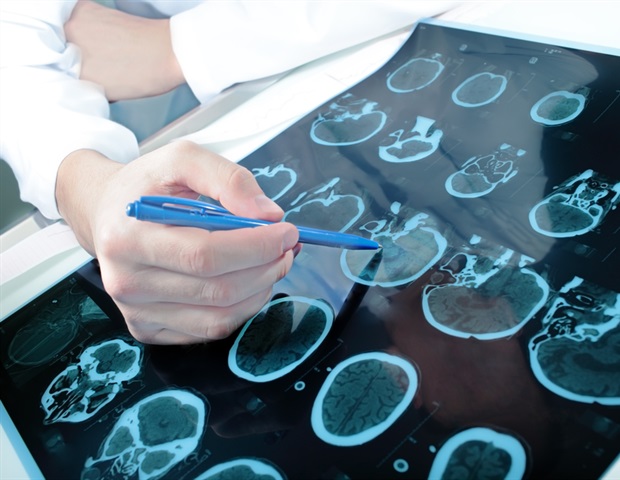
For gamers on the placebo therapy, mind irritation elevated over the course of the season. Particularly, magnetic resonance imaging (MRI) scans taken on the finish of the season confirmed considerably extra indicators of irritation than scans taken in the beginning of the season. However for gamers who used the machine with an energetic pink gentle, mind irritation did not improve over the season.
My first response was, ‘There isn’t any manner this may be actual. The group receiving pink gentle remedy seemed to be shielded from irritation all through nearly all areas of the mind.
Hannah Lindsey, PhD, analysis affiliate in neurology, College of Utah Well being and first creator on the research
Use of pink gentle remedy for mind well being remains to be in its infancy, however the researchers emphasize that each new remedy begins someplace, and the potential mechanism of motion is sensible. Sufficiently highly effective pink gentle could make it by means of the cranium and into the outer floor of the mind, though the quantity of sunshine that reaches the mind is a really small fraction of the full. And a few earlier research utilizing human cells and animal fashions have proven that particular wavelengths of sunshine can cut back the degrees of a few of the molecules that drive irritation.
Extra analysis is required
The researchers say that whereas pink gentle remedy remains to be an rising expertise and extra information is required, they’re changing into extra satisfied of its promise over the course of a number of preliminary research with individuals who have skilled head impacts. “Once we first began this mission, I used to be extraordinarily skeptical,” says Elisabeth Wilde, PhD, professor of neurology at U of U Well being and the senior creator on the research. “However we have seen constant outcomes throughout a number of of our research, so it is beginning to be fairly compelling.”
An necessary caveat to the research is its small pattern measurement, which led-due to random chance-to completely different preliminary ranges of irritation within the therapy and management teams. This emphasizes that future giant randomized scientific trials might be essential to again up the leads to broader populations. The analysis group is at the moment beginning a Division of Protection-funded randomized managed trial that can contain 300 individuals who have persistent signs from TBI or concussion, centered on first responders, veterans, and energetic responsibility service members. The crew is anticipating to start out recruitment in February or March 2026.
Carrie Esopenko, PhD, affiliate professor of neurology at U of U Well being and second creator on the research, hopes that the outcomes will assist maintain athletes wholesome throughout all sports activities and age ranges. “We have been making an attempt to determine methods to make sports activities safer, in order that our youngsters, associates, and household can take part in sports activities safely for the long run whereas they’re concerned in actions that give them happiness and pleasure,” she says. “And this actually seems like a part of the hope for safeguarding the mind that we have been trying to find.”
The outcomes are printed in Journal of Neurotrauma as “Transcranial Photobiomodulation Promotes Neurological Resilience in Present Collegiate American Soccer Gamers Uncovered to Repetitive Head Acceleration Occasions.”
The analysis was supported by a Brigham Younger College (BYU) Mentoring Setting grant, a BYU MRI Facility seed grant, the BYU Athletics Division, and a grant from the BYU School of Household, Residence, and Social Sciences.
Lawrence Carr, PhD, is a marketing consultant for Vielight, Inc., which manufactures the light-emitting gadgets used within the research.
Supply:
College of Utah Well being
Journal reference:
Lindsey, H. M., et al. (2026). Transcranial Photobiomodulation Promotes Neurological Resilience in Present Collegiate American Soccer Gamers Uncovered to Repetitive Head Acceleration Occasions. Journal of Neurotrauma. DOI: 10.1177/08977151251403554. https://journals.sagepub.com/doi/10.1177/08977151251403554
