



The six-car ICE convoy got here to a cease and immediately dozens of individuals swarmed it, cellphones in hand, whereas others ran out of close by homes—I noticed a lady in fitness center shorts within the 20-degree climate—and started surrounding the masked and closely armed brokers who had spilled out of their black SUVs. The fury within the crowd felt virtually like a bodily power, as actual because the cacophony of whistles and honking automobiles and offended chants: “ICE out! Fuck you! Go house!”
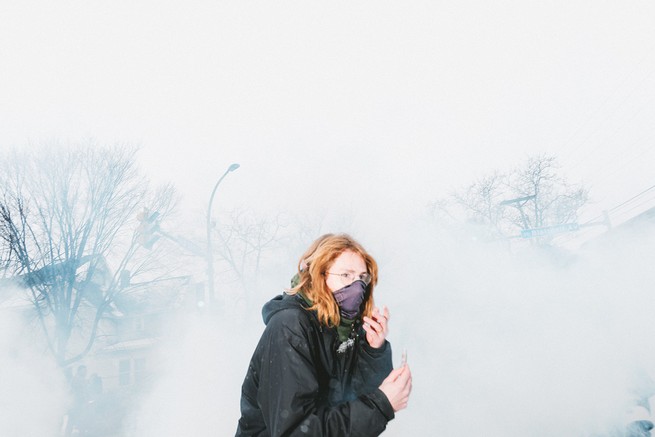
The officers threw a protester to the slushy asphalt and piled on high of him, then cuffed him and dragged him away. The screaming solely received louder. With their escape route blocked by protesters and their automobiles, the brokers tossed out tear-gas canisters, the white clouds billowing up into the winter air. An injured man stumbled previous me and vomited repeatedly into the snow.
From the place I stood, just a few yards again from the scrum final Wednesday afternoon, it regarded, at finest, to be a savage caricature of our nationwide divide: on one facet, militarized males demanded respect on the butt of a gun; on the opposite, offended protesters screamed for justice.
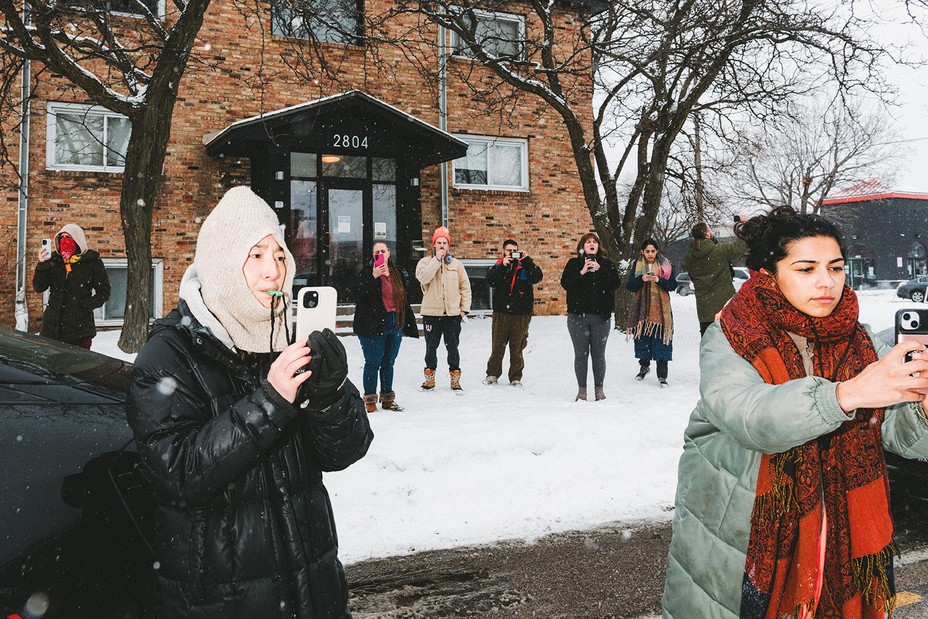
However behind the violence in Minneapolis—captured in so many chilling pictures in current weeks—is a distinct actuality: a meticulous city choreography of civic protest. You would see traces of it within the similar whistles the protesters used, of their chants, of their techniques, in the way in which they adopted ICE brokers however by no means really blocked them from detaining folks. Hundreds of Minnesotans have been educated over the previous yr as authorized observers and have taken half in prolonged role-playing workout routines the place they rehearse scenes precisely just like the one I witnessed. They patrol neighborhoods day and evening on foot and keep related on encrypted apps equivalent to Sign, in networks that had been first shaped after the 2020 killing of George Floyd.
Time and again, I heard folks say they weren’t protesters however protectors—of their communities, of their values, of the Structure. Vice President Vance has decried the protests as “engineered chaos” produced by far-left activists working in tandem with native authorities. However the actuality on the bottom is each stranger and extra attention-grabbing. The motion has grown a lot bigger than the core of activists proven on TV newscasts, particularly because the killing of Renee Good on January 7. And it lacks the form of central path that Vance and different administration officers appear to think about.
At instances, Minneapolis jogged my memory of what I noticed through the Arab Spring in 2011, a collection of avenue clashes between protesters and police that rapidly swelled right into a a lot bigger wrestle in opposition to autocracy. As in Cairo’s Tahrir Sq., Minneapolis has seen a layered civic rebellion the place a vanguard of protesters has gained power as many others who don’t share progressive convictions joined in feeling, if not all the time in particular person. I heard the identical tones of shock from mother and father, ministers, college academics, and aged residents of an prosperous suburb. A number of the quarrels that divided Minneapolis metropolis leaders just a few weeks in the past, over policing or Gaza or the funds, have light as folks have come collectively to oppose ICE.
“General, this group has exercised monumental restraint,” Allison Sharkey, the manager director of the Lake Road Council, which represents many minority-owned companies which were hit arduous by the ICE raids, informed me. “However we now have been pushed, most likely deliberately, in direction of civil unrest.”
And as with the Arab uprisings, there’s profound unease about the place it’s all main—particularly now that two folks have been shot lifeless in scenes just like the one I witnessed—alongside an undertow of hope that Minnesota can present the remainder of the nation with a mannequin of democratic resistance.
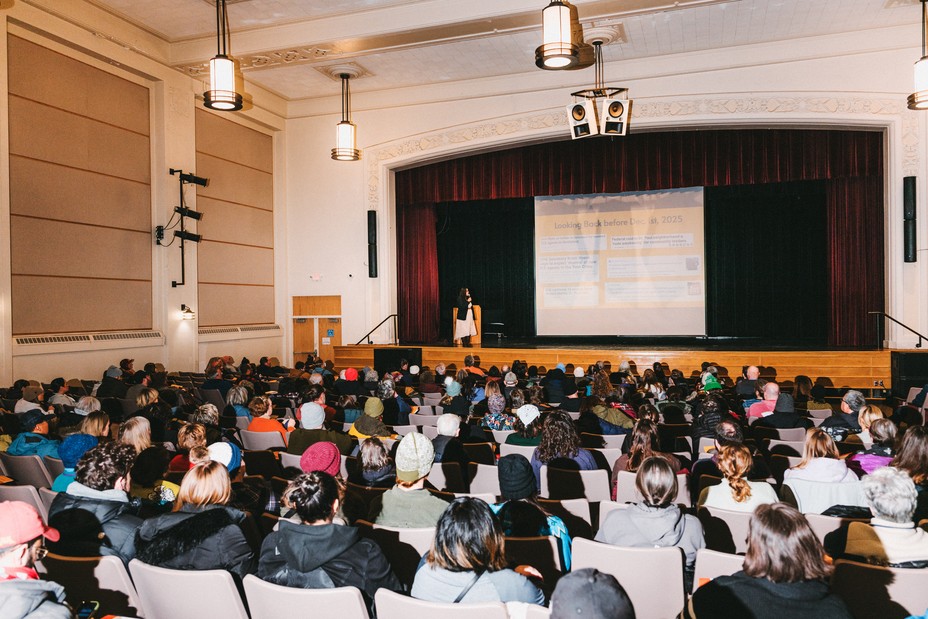
Over the previous yr, a three-story brick constructing in south Minneapolis has turn out to be a magnet for individuals who really feel they—and their neighbors—want safety from their very own authorities. The nonprofit that runs coaching periods there requested me to not establish its location. Once I visited, an ebullient labor organizer named Emilia Gonzalez Avalos was standing onstage in entrance of a packed auditorium, speaking in regards to the facial-recognition expertise utilized by ICE brokers, who routinely {photograph} protesters. “Everyone seems to be in danger now,” she mentioned. Behind her, a display supplied bullet factors on how you can legally observe ICE raids.
Avalos informed me that 65,000 folks have acquired the coaching, most of them since December. “We began in a really totally different tone; it was preventive,” she mentioned. Now, after Good’s loss of life, “individuals are understanding the stakes differently.”
I went upstairs to see breakout periods the place folks had been being educated for direct confrontations with ICE. Inside a classroom, a number of dozen folks ranging in age from 14 to about 70 confronted off in opposition to three trainers taking part in ICE brokers, in a loud fracas that lasted a number of minutes. Afterward, the trainers supplied the volunteers a critique. One gray-haired girl mentioned she had discovered the train tough, “not being a ‘Fuck you’ particular person.” Others received tips about how you can brace themselves extra successfully in order that the brokers couldn’t simply knock them down.
Earlier than I left, I watched the trainers put the group via two extra simulations: an sudden ICE raid on a neighbor’s house and a deliberate demonstration at an airport that ICE is utilizing to deport folks. The second state of affairs appeared to return to life just a few days later, when about 100 clergy members had been arrested for protesting on the Minneapolis–St. Paul Worldwide Airport.
The members I spoke with didn’t seem to be typical protest sorts. One in every of them, a driver’s ed trainer who requested me to establish him solely as Dave, informed me, “I don’t like confrontation in any respect, and that’s another excuse that it’s bizarre I went to the coaching.” However in mild of what’s occurring round him, he felt he wanted what the trainers needed to supply. His 14-year-old daughter, who attended the coaching with him, informed me, “It was form of overwhelming. However I don’t suppose it may very well be an excessive amount of, as a result of they’re simply being lifelike.”
The nonprofit teams that run these coaching periods usually are not organizing or directing the anti-ICE protests going down within the Twin Cities. Nobody is. It is a leaderless motion—just like the Arab Spring protests—that has emerged in a spontaneous and hyperlocal method. The individuals who observe ICE convoys (they name themselves “commuters,” a verbal gesture that’s half joke and half effort to elude authorities surveillance) have organized on a neighborhood foundation, utilizing Sign teams. The person who drove me to the ICE raids I witnessed—a lawyer, activist, and social-media determine named Will Stancil—had a cellphone mounted above the windshield of his automobile, and I may hear folks monitoring the placement of the ICE convoy because it handed via their neighborhoods on a Sign audio chat. It was like being inside a police automobile that’s getting updates by radio from a dispatcher.
You would not have to get tear-gassed to look at all of this self-organization; it’s seen to anybody strolling via Minneapolis. One bitterly chilly morning, I approached a person standing throughout the road from an elementary college, a blue whistle round his neck. He informed me his identify was Daniel (he requested to not be recognized additional, as a result of his spouse is an immigrant) and that he stood watch each morning for an hour to ensure the children received into college safely. Different native volunteers come by recurrently to convey him espresso and baked items, or to trade information. These group watches happen exterior faculties all through the Twin Cities, exterior eating places and day-care facilities, exterior anyplace the place there are immigrants or individuals who is likely to be mistaken for them.
“It’s form of unorganized-organized,” Daniel mentioned, once I requested how the varsity monitoring labored. “George Floyd related everyone.”
The native networks that shaped after Floyd’s killing weren’t nearly preventing racism. Throughout these febrile weeks in Might and June of 2020, there have been looters and provocateurs of every kind on the streets, and a lot anger had been directed on the police that they pulled again from elements of town. Many neighborhoods started organizing native watches merely to defend themselves.
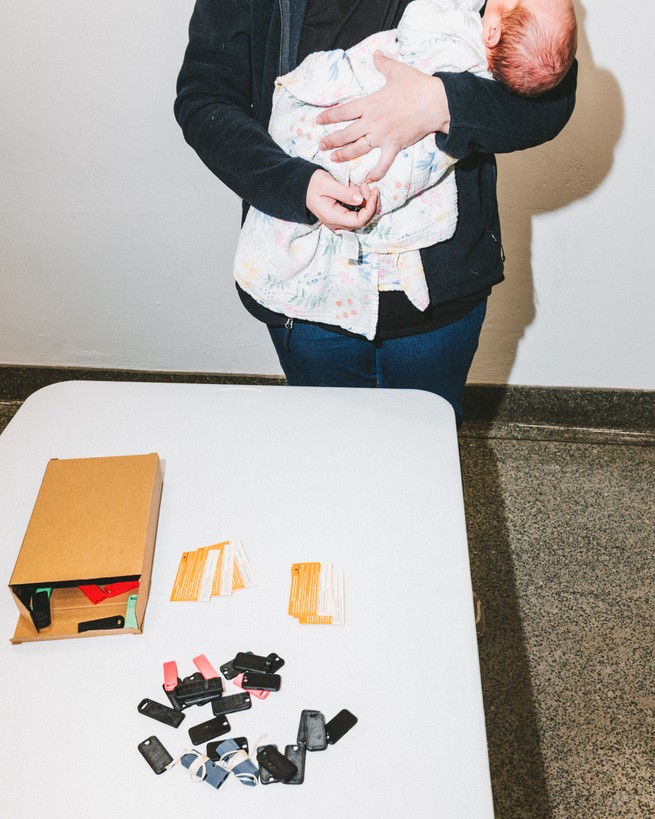
I had been speaking with Daniel for just a few minutes when a tall man walked up, mentioned he was a father or mother observer for the varsity we stood throughout from, and requested me to establish myself. Once I confirmed him my press badge, he appeared friendlier, however nonetheless cautious. He defined that he had heard experiences of ICE brokers impersonating journalists. I requested in regards to the father or mother patrol, and he apologized, saying he couldn’t give out any data.
Inside the faculties, many directors have been making their very own preparations over the previous yr. Amanda Bauer, a trainer at a Minneapolis elementary college that has a big portion of immigrant college students, informed me that directors knowledgeable mother and father final fall about their emergency plans for ICE raids by cellphone or in particular person, as a result of they had been already involved about leaving e mail chains that may very well be mined by a hostile authorities.
Bauer, who’s 49, struggled to take care of her composure as she described the day early this month when ICE confirmed up in power exterior her college. Brokers had been circling the varsity since December, seemingly studying its routines, and so they arrested some mother and father simply earlier than the winter break. However this time, brokers leapt out in riot gear and started coming into the residences simply throughout from the varsity, the place many college students dwell.
“We needed to lock down and maintain the children inside, and fogeys linked arms to dam the varsity entrance,” Bauer mentioned. “We had a scholar who was looking the window and noticed them break into his residence and simply sobbed, ‘That’s my home. That’s my house.’ And we shut the blinds, however it was too late.”
Bauer has been a trainer for 25 years, a interval that has included an increase of faculty shootings and the drills which have turn out to be widespread to guard in opposition to them. “However I by no means thought it will be our personal authorities we needed to defend the children from,” she informed me. “We saved them bodily protected, however they noticed what occurred.”
As she spoke, Bauer’s fingers had been trembling. She held them up and smiled weakly. “I don’t suppose I’ve stopped shaking for 2 weeks,” she mentioned.
Kids had been an ethical fault line for lots of the folks I met within the Twin Cities—not simply the youngsters of immigrants, who’re vulnerable to shedding their mother and father or being deported themselves, but additionally their white friends in faculties and day-care facilities.
I met a pair of their 70s who informed me they’d by no means thought of becoming a member of a political protest till ICE got here to city, and so they realized that their granddaughter was vulnerable to witnessing a violent immigration raid simply by going to highschool. Dan and Jane (like many others, they requested that I protect their full names) dwell in a big home in a cushty suburb, the place they welcomed me with tea and cookies.
“When a toddler witnesses violence or crime, it’s profoundly totally different from adults,” Dan mentioned. “It leaves scars.”
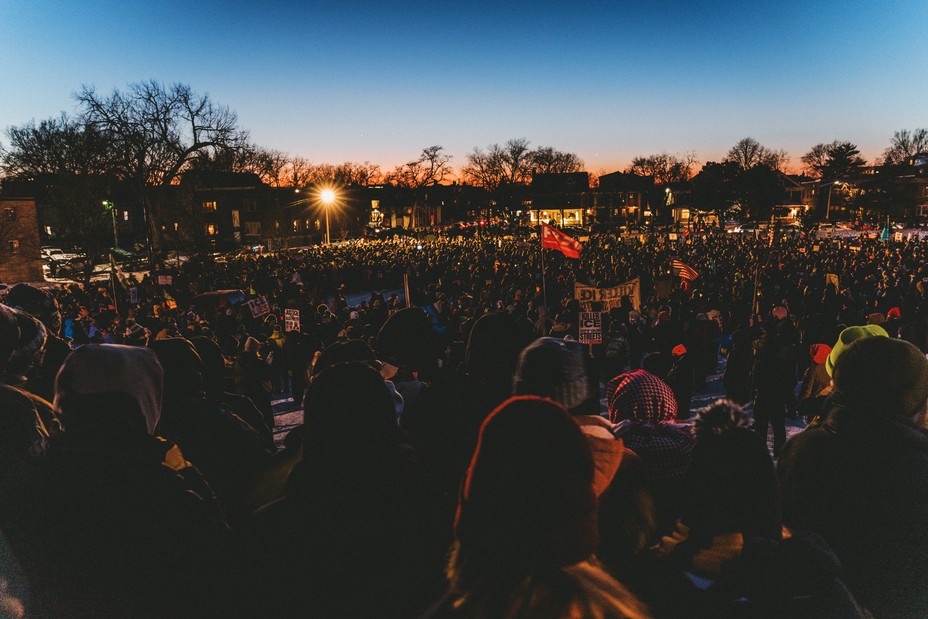
Dan and Jane resisted the concept that they’d turn out to be political. A greater phrase, Jane mentioned, was humanist. Their anger was unmistakable as they informed me that the Trump administration was violating primary Christian ideas. “It grew to become clear in a short time that ICE is the Proud Boys, the Boogaloo boys. They’ve given them uniforms and allow them to run wild,” Dan mentioned. He attended a legal-observer coaching—which occurred to have been on the day Good was killed—and now the couple delivers groceries recurrently to immigrant households in Minneapolis. This previous Friday, Dan joined 1000’s of others at a protest in Minneapolis, the place his fingers had been frostbitten within the –9 levels Fahrenheit climate.
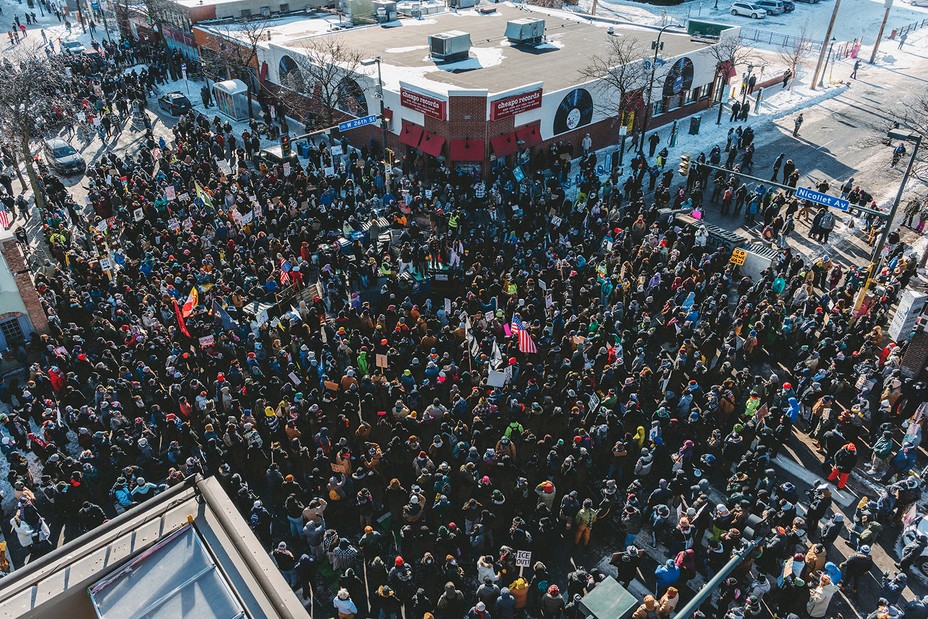
I arrived in Minneapolis 11 days after an ICE agent shot Good within the face. Her image was hanging like a non secular icon on home windows and partitions everywhere in the metropolis. To many who had not already turn out to be concerned, her loss of life was a name to motion.
A kind of latecomers was a 46-year-old documentary filmmaker named Chad Knutson. On the morning after Good was killed, he was at house along with his two hound canines, watching a dwell feed from the Whipple Constructing, the place ICE is predicated, a five-minute drive from his home. A protester had laid a rose on a makeshift memorial to Good. As Knutson watched, an ICE agent took the rose, put it in his lapel, after which mockingly gave it to a feminine ICE agent. They each laughed.
Knutson informed me he had by no means been a protester. It appeared pointless, or only a method for folks to expiate their sense of guilt. However when he noticed these ICE brokers laughing, one thing broke inside him.
“I seize my keys, I seize a coat, and drive over,” Knutson informed me. “I barely park my automobile and I’m operating out screaming and crying, ‘You stole a fucking flower from a lifeless girl. Like, are any of you human anymore?’”
His voice was so thick with emotion that it felt virtually as if he had been telling a narrative of non secular conversion. It jogged my memory once more of the Tahrir Sq. protests in 2011, when so many individuals appeared to have reached an ethical and political turning level.
Knutson now goes to the Whipple Constructing virtually every day, bringing thermoses of scorching espresso for the individuals who maintain up indicators and bellow on the ICE brokers and convoys as they drive out and in. He has been tear-gassed so many instances, he mentioned, his voice has gone hoarse. Once I met him at his home in St. Paul, a row of megaphones was on the counter. He fingers them out together with the espresso. He as soon as introduced an ice-fishing clam, a transportable shelter, to the Whipple to assist the protesters stand up to the subzero temperatures.
Knutson talked about in passing that his neighbor had “an adopted brown child down there; they hid her within the basement yesterday.” This type of factor not sounds bizarre in Minneapolis. Many individuals are hiding indoors—so many who, in a metropolis with a considerable minority inhabitants, I hardly noticed any Black or Latino faces on the road.
All this sheltering has created an financial disaster that has grown worse by the day. Many immigrant-owned companies have seen their gross sales drop by as a lot as 80 p.c, mentioned Allison Sharkey, of the Lake Road Council. Giant numbers have shut their doorways completely, fearing for themselves or their staff. Sharkey known as it “an assault on our complete Predominant Road.”
The Karmel Mall, a maze-like purchasing hub for tens of 1000’s of east African immigrants within the Twin Cities, is normally filled with folks drawn to the aromas of stewed goat and occasional and sambusa pastries, however once I visited, the place was silent, and a lot of the stalls had been empty. On the far finish I discovered some companies nonetheless open, with a handful of consumers. A number of folks regarded frightened once I tried to ask questions, saying they didn’t communicate English effectively or that the proprietor can be again in an hour.
One man prepared to speak, a 42-year-old named Ziad who was sipping espresso by himself, rapidly confirmed me his passport card, saying he had come to america from Somalia a long time in the past. He has a grasp’s diploma in public well being and was working in a group heart, he mentioned, however now it’s closed. “No person’s being paid,” he mentioned. “Everyone is scared.” His kids are attending college on-line, as they did through the coronavirus pandemic, and his spouse virtually by no means leaves house. The visits to the mosque and to members of the family and associates that sustained their emotional lives are on maintain.
However Donald Trump “will go and we are going to keep,” he mentioned. “We Somalis know how you can survive. We’ve been via so much—civil battle, refugee camps.”
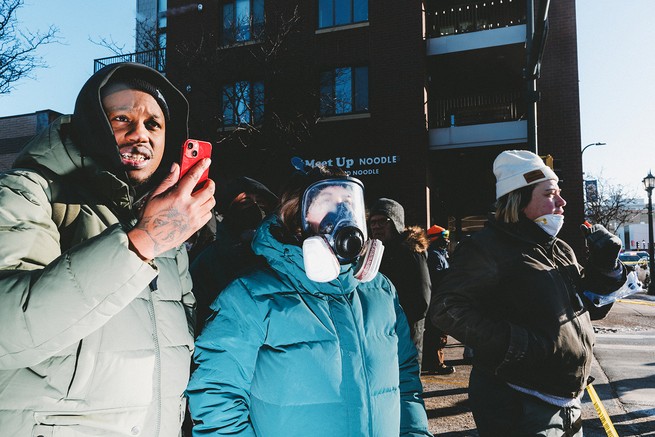
The Somali refugees who started coming to the Twin Cities within the early Nineteen Nineties did so with the assistance of non secular organizations and church buildings, particularly Lutheran and Catholic parishes, which have a historical past of welcoming folks fleeing battle and famine. These teams have been on the forefront of the resistance to ICE, and a few of their leaders have been asking tough questions: When does protest cross the road into violence? When is it morally acceptable to interrupt the legislation? How do you keep the belief of people who find themselves uncomfortable defying the authorities?
“We’re going to should dwell with our discomfort in making different folks uncomfortable,” Ingrid Rasmussen, the lead pastor at Holy Trinity Lutheran Church, who has been one of the vital outspoken clergy members within the metropolis, informed me.
Final June, federal brokers raided a taqueria close to her church. She ran to the scene, she informed me, and located a crowd of protesters dealing with off in opposition to closely armed brokers being protected by native police. Rasmussen was sporting her clerical robes and was thrown to the bottom by a sheriff in plainclothes. Some within the crowd threw trash, bottles, and tires on the federal brokers, in accordance with an area information report. Video footage unfold of Rasmussen shouting on the Minneapolis police chief: “You stand in my church … You promised me a greater relationship.”
“It was like nothing I had ever seen earlier than in Minneapolis,” Rasmussen informed me.
That was a outstanding factor to listen to, as a result of Rasmussen’s church was close to the middle of the riots that passed off after the killing of George Floyd in 2020. “Every part to the west of our constructing burned,” she informed me. Throughout that interval, her church grew to become a medical web site for injured folks. She and her congregation labored for years to assist rebuild the neighborhood.
The brand new spherical of ICE raids has struck even nearer to house for the church, whose congregation contains numerous immigrants. Rasmussen, who has younger kids, has continued to place herself in hurt’s method. She was among the many 120 clergy members who took half in a sit-in on the company headquarters of Goal on January 15, in an effort to get the corporate to take a stronger stand in opposition to the federal raids. And on January 23, she was amongst these arrested through the protest on the Minneapolis airport.
On the morning of January 24, Rasmussen received phrase {that a} man had been shot by ICE brokers. She placed on her warmest winter garments and went to the scene, on Nicollet Avenue and West twenty sixth Road, figuring she is likely to be exterior for hours.
By the point she received there, Alex Pretti, an ICU nurse, was lifeless. The federal brokers who had wrestled him to the bottom after which shot and killed him had been throwing tear fuel and flash-bangs at a crowd of livid protesters chanting “Disgrace!”
Rasmussen attended one other protest that afternoon. Once we spoke hours later, her voice sounded weary, as if she wasn’t positive what such gestures of defiance would accomplish. She discovered it “virtually insufferable” to witness such brutality from her authorities day after day, she informed me. And it was galling to listen to folks in energy say that they had been performing in protection of freedom. The streets nonetheless regarded like a battle zone, with flash-bangs detonating and clouds of tear fuel within the air.
