



The heaps of khipus emerged from rubbish baggage at the back of the tiny, one-room museum—clumps of tangled ropes the scale of seashore balls. Sabine Hyland smiled as she gazed down at them and mentioned, “Qué lindo, qué lindo”: how stunning. Hyland, an anthropologist, had traveled right here to the distant mountain village of Jucul within the Peruvian Andes to review them, within the hope of unlocking probably the most necessary misplaced writing methods in historical past, that of the Inca empire.
As a substitute of writing on clay tablets or papyrus, as different historic societies did, the Incas recorded info by tying knots into lengthy cords they known as khipus. Only some Andean villages have preserved their khipus by means of the centuries; those who have survived are revered, and village elders have typically stored their existence secret even from different neighborhood members. But past scraps of lore, most villagers don’t know what their khipus say: Data of the best way to learn them has all however vanished within the 500 years for the reason that Spanish conquered and destroyed the Inca empire within the 1500s.
Jucul sits at an altitude of 11,800 toes, six hours north of Lima on axle-rattling mountain roads. The village is surrounded by green-brown slopes streaked with rocks, like waterfalls frozen in place. Most of its roughly 150 inhabitants dwell in mud-brick houses with tin roofs, and canines roam freely. The gradients are steep; you may stroll one block and ascend two tales. Practically everybody wears a Stetson or solar hat or ball cap—L.A. Lakers, Miami Warmth, KEEP AMERICA GREAT.
The individuals of Jucul stored their khipus locked away for hundreds of years; Hyland and I had been among the many first outsiders ever to see them. New khipus hardly ever flip up anyplace within the Andes, so these cords may quantity to a serious breakthrough for Hyland, a professor on the College of St Andrews, in Scotland.
Though some students doubt that they’ll ever be capable to learn khipus totally, even a partial studying of the undeciphered cords would assist illuminate the historical past of the Andean individuals who started recording info on them greater than a millennium in the past. Hyland has already revealed a proposed decoding of some syllables on khipus from different villages. If the Jucul ones present extra clues, she and her colleagues may someday be capable to use them to crack open the misplaced historical past of the Inca empire, which was, at its peak, the most important civilization within the Americas.
The Incas started conquering close by kingdoms within the mid-1400s, and in lower than a century that they had subdued a inhabitants of 12 million. The almost 25,000 miles of roads they constructed, many by means of punishing mountain terrain, facilitated communication between far-flung areas, as did the quite a few rope bridges they suspended over dizzying gorges. The Incas had superior calendars and ceramics as effectively, and perfected a sort of neurosurgery, prone to deal with cranium wounds suffered in battle, amongst different illnesses. However most traces of the empire have vanished. The hilltop advanced of Machu Picchu is certainly one of its few enduring relics.
Khipus are one other. Roughly 1,400 khipus have survived, however lots of of 1000’s had been seemingly in use within the 1400s. Most khipus are made primarily of cotton or animal hair (llama, alpaca) and have the same construction: a protracted, thick “major” twine from which as much as 1,000 tasseled or knotted “pendant” cords dangle. The bulk encompass plain beige, brown, or white cords, however others show a variety of colours; Hyland has studied one which comprises strands of “crimson, gold, indigo, inexperienced, cream, pink, and shades of brown from fawn to chocolate.” Some even have objects knotted into them; Hyland has heard that just a few khipus in Jucul may include locks of human hair, baggage of coca leaves, and a doll which may signify a god or supernatural being.
“I’m not leaving this village with out seeing that doll,” she informed me.
Beneath her pleasure, although, Hyland confessed that she was nervous. The bundles within the museum had been so snarled—real-life Gordian knots—that unraveling them appeared hopeless. The khipus’ centuries-old fibers additionally appeared fragile, as if one errant tug may snap the strands and destroy the knowledge encoded there. That’s to say nothing of the duty of really figuring out what they may imply.
Deciphering a misplaced writing system requires a uncommon mixture of linguistic aptitude, statistical savvy, and deep cultural data of the area in query. Some students have spent their entire lives toiling on misplaced scripts and died with nothing to point out for his or her efforts. Probably the most well-known decipherment ever, that of Egyptian hieroglyphs, required the invention of the Rosetta stone, which contained near-identical texts written in historic Egyptian and historic Greek. Even with that giant head begin, decoding the script nonetheless took twenty years.
But khipu students appear optimistic as of late. “Everyone seems like we’re shut,” says Jon Clindaniel, an anthropologist and pc programmer on the College of Chicago. There’s a brand new collaborative spirit within the area; key knowledge are being shared extra extensively than even just a few years in the past. On the similar time, subtle radiocarbon relationship strategies and novel approaches involving AI are being employed. As Hyland put it, “We’re in an entire new Renaissance of khipu research.” Additional progress may open up new tracts of data in regards to the origins of writing, in addition to the rise—and fall—of one of many best misplaced empires in historical past.

Hyland and I arrived in Jucul on a sunny day in June. We had been greeted with offal-and-corn soup and offered with necklaces threaded with carnations, roses, toffee, lollipops, and round knots of bread, a type of Peruvian bagel. That night time within the village museum—a room that includes Jucul’s most prized possessions, together with historic skulls and youth-volleyball trophies—we took half in a ceremony she known as a chacchadero, meant to bless Hyland with good luck in deciphering the khipus.
A desk was unfold with coca leaves, liquor comprised of uncooked sugar cane, and rolled cigarettes. Hyland had suggested me to not refuse something I used to be supplied—individuals may get offended—so after a gap prayer, I wadded some crinkly coca leaves into my cheek and swigged the cane liquor, then dutifully choked my approach by means of my first cigarette. A rating of speeches adopted. At one level, somebody handed round a gourd with white powder inside. I used to be alarmed to assume I could be snorting my first cocaine that night time as effectively, till Hyland defined that it was lime, a calcium-based mineral that, when dissolved within the mouth, attracts extra stimulants out of the coca. The trick labored. Regardless of the 40-degree chilly outdoors, I used to be flushed heat once we emerged from the museum, and I spent just a few stressed hours on my cot earlier than the excitement from the coca wore off.
The subsequent morning, we swept coca mud and cigarette ash off the desk, opened a rubbish bag, and plopped down the primary of 4 khipu bundles, which weighed about 20 kilos and supposedly contained the goddess doll. I’d volunteered to assist unravel, though I used to be immediately regretting it. Think about a snarl of Christmas lights so huge you want two arms to hold it. Cautious of the brittle strands, I hunted round as delicately as attainable for free ends and wriggled my approach elbow-deep into the rat’s nest, palpitating each loop and twist. Sadly, disturbing the ropes like this induced them to shed, and earlier than lengthy, a cloud of dander was tickling my nostril; some settled on my tongue.
One stretch of twine appeared significantly fragile. It was darkish yellow and Hyland mentioned it appeared like maguey, a vegetable fiber. I spent 20 minutes teasing it free, centimeter by centimeter, and exhaled with reduction when it emerged intact. (I later discovered that this part wasn’t maguey however animal hair that had suffered harm from rodent urine.) Nonetheless, it was only one liberated foot amid seeming miles of khipus.
Fortunately we had assist. Victor Margarito, who runs the Jucul museum, had a knack for untangling the snarls: Like a magician pulling handkerchiefs from inexplicable locations, he stored wriggling his fingers into the bundle and rising with total yards of free rope. Thanks principally to him, we finally extracted 20 separate khipus and khipu fragments from the bundle—together with a black-and-white one with a barber-pole-swirl major twine that despatched Hyland into one other refrain of ¡Qué lindo! We didn’t discover a doll, however we did uncover small tassels that resembled ghosts, in addition to shriveled scraps of rawhide certain to hair that appeared uncannily human. It turned out to be llama or alpaca fibers. The entire thing stretched 74 toes—longer, she mentioned, than every other khipu ever recorded to this point.
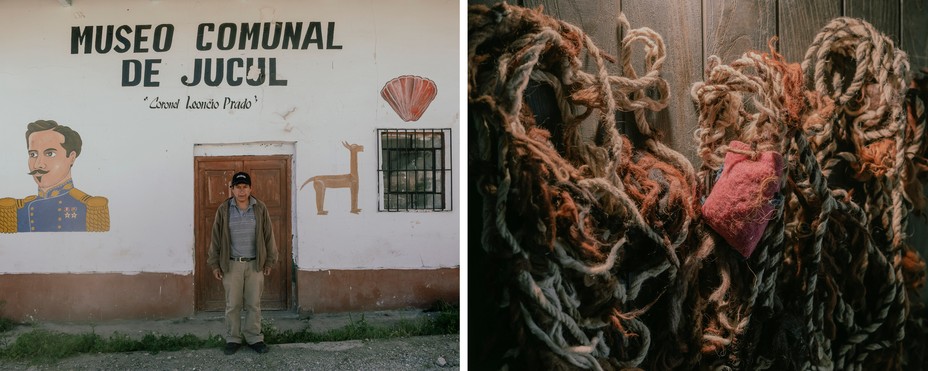
Most fun of all, a coca pouch the scale of a pockets was sewn onto the first twine. It was dyed pink, and had blue tufts on every nook. Hyland was thrilled: Coca is a quintessential ritual merchandise in Andean tradition, and he or she mentioned the bag offered good proof that the khipus had been utilized in rituals as effectively. Certain sufficient, Margarito labored open the bag’s knot and located, amid desiccated coca leaves, a pair of historic cigarettes rolled in centuries-old paper—an echo of the earlier night time’s ceremony.
Absolutely understanding the khipus’ that means, although, would take way more time and research. The tassels had been totally different colours, totally different fiber varieties, totally different thicknesses—all variables that might encode that means in numerous methods. As Hyland put it, “The place do you even begin deciphering that?”
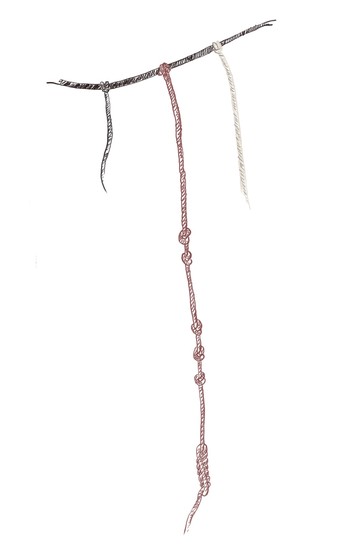
The first breakthrough in khipu decipherment befell within the 1910s. An American math trainer and beginner historian named Leland Locke had been finding out the historical past of counting units, and he turned his consideration to a cache of khipus on the American Museum of Pure Historical past in New York. He decided that almost all khipus file numbers, functioning like textile abaci, a idea later confirmed by a khipu unearthed in an historic Inca cemetery. The hanging pendant cords are divided into “decimal zones” of various values. To log the quantity 237, for instance, a khipukamayuq, or “khipu animator,” would first make two overhand knots within the “lots of zone” close to the first twine. Then they’d scoot down an inch or two and make three extra knots within the “tens zone.” Lastly, after scooting down one other inch, they’d tie a particular knot with seven round loops. Some khipus encode numbers that attain into the tens of 1000’s.
Students now consider that the Incas typically used these numerical information to depend items. In 2013 and 2014, as an illustration, archaeologists excavated an Inca storehouse and located a number of khipus alongside caches of peanuts and chili peppers; a 2015 paper argued that the cords helped monitor how a lot meals was readily available. Shut examination of the numbers additionally advised that storehouse officers would subtract a set quantity from every cache and set it apart, most likely both as taxes or as seeds for the following yr’s planting.
However not all khipus served as ledgers. Spanish chronicles from the 1500s state that the Incas used khipus as letters, calendars, authorized paperwork, biographies, historic texts, and probably even poems.
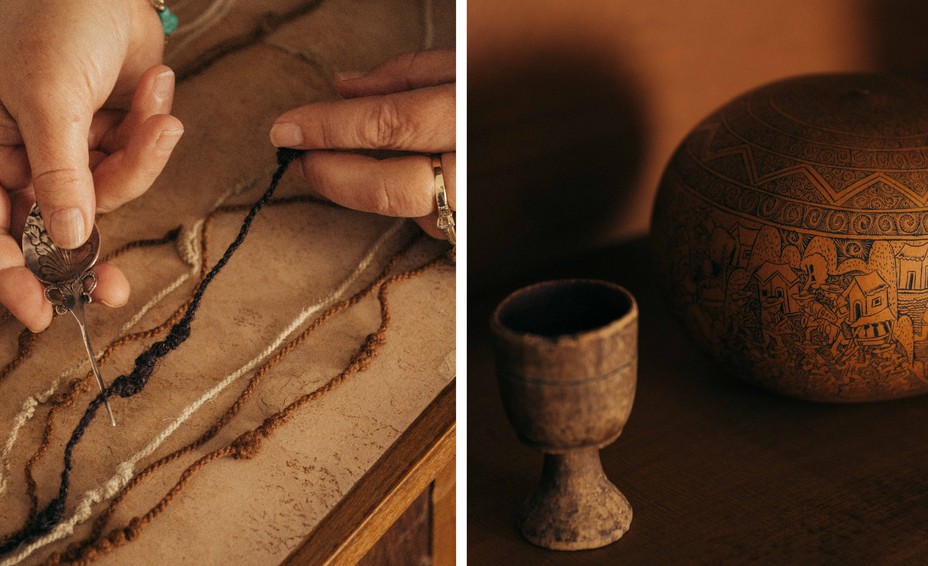
The Jucul khipus, Hyland mentioned, virtually actually include some linguistic info: The hanging pendant cords include no knots, so in the event that they did file numbers, it was by another means. Hyland believes that they might encode phrases as an alternative, by means of variables equivalent to shade; fiber kind (cotton, animal); and the left- or right-hand twist of the strands. The Jucul khipus additionally resemble one other, badly broken set from the Andean village of Rapaz, the place locals say their khipus functioned as spiritual calendars, documenting gadgets supplied for sacrifice throughout festivals. Each the Jucul and Rapaz khipus seemingly originated in Spanish colonial instances, maybe as early because the 1500s, after the Inca empire disintegrated however earlier than the Andean individuals stopped utilizing the medium for file preserving.
It’s an open query whether or not contact with the Spanish modified the character of khipu writing, and whether or not Inca-era khipus (pre-1530s) and colonial-era khipus file info in related methods.
A much bigger query is at stake right here too. Over time, writing arose in a number of places in Asia and Africa. But as a result of these continents had been in fixed contact with each other, exchanging items and concepts, students have debated whether or not writing sprung up independently in every spot or first appeared in a single place earlier than spreading elsewhere. Against this, scientists are sure that new-world civilizations developed their writing methods independently from these of different continents, as a result of these methods originated earlier than any contact with the Outdated World. These writing methods, then—together with, probably, Inca khipus—may illuminate how and why our ancestors first adopted written language: a file of probably the most consequential modifications in human historical past.

Hyland, now 60, first fell in love with Andean tradition at age 16. In 1980, her father, an agricultural scientist, took a year-long submit in Lima, at a crop-research station known as the Worldwide Potato Middle, and introduced his household with him from their house in New York State. He studied seed-storage methods, and every time he visited rural areas, she would tag alongside. The Andean panorama and way of life thrilled her. She recollects a area journey with a church group to a museum of historic artifacts in Lima. Along with seeing some erotic pottery that scandalized her chaperones, she glimpsed a powerful khipu with blue and brown cords hanging on a wall.
Throughout school at Cornell, Hyland studied anthropology and discovered Quechua, the dominant language of the Inca empire. She earned her Ph.D. at Yale in 1994; certainly one of her professors was Michael Coe, who helped decipher the hieroglyphs of the Mayan empire. His success impressed Hyland to consider that deciphering narrative, nonnumerical khipus could be attainable.
However the area of khipu research had grown stagnant, partially as a result of some outstanding students argued that nonnumerical khipus had been merely private mnemonic units. That’s, they believed that every khipu maker would file info utilizing an idiosyncratic sample of colours, knots, and fibers—a code that nobody else may perceive. Khipu makers may learn their very own cords, the speculation went, however nobody else may, and after they died, their khipus turned indecipherable.
An anthropologist named Gary Urton challenged that concept. In a sequence of papers and books he wrote whereas educating at Colgate College within the Nineteen Nineties, he argued that the Inca empire was extremely centralized, and that officers wouldn’t have left the recording of important info to the whims of particular person scribes. There needed to be a standardized system. Urton’s idea finally gained over his colleagues and revitalized the sphere.
Urton had a captivating backstory: He informed reporters that he’d give up Boy Scouts after failing knot tying, and that he was impressed to decipher the “trapped” phrases inside khipus as a result of a childhood stutter had left his personal voice trapped inside him. In 2000, he gained a MacArthur genius grant, then jumped from Colgate to Harvard and shortly turned the sphere’s star scholar.
Shortly after arriving at Harvard, Urton, then 56, determined to create a database to advertise the systematic research of khipus, with info on their size, variety of cords, and different attributes. He employed 32-year-old Carrie Brezine to construct it. She was uniquely suited to the position: She had a level in arithmetic and an curiosity within the topic. She was additionally an enthusiastic beginner weaver; she’d even made khipus herself.
The 2 started an affair; Brezine later mentioned she felt pressured by Urton to acquiesce and to proceed the affair due to his energy and standing within the area. She additionally enrolled in a Ph.D. program at Harvard, with Urton as her adviser. Though she’d constructed the database, she says that intercourse was a situation of her means to make use of it. “Gary made it clear that he may and would revoke my entry at any time if I didn’t carry out adequately,” she informed Science journal in 2020. (In an e mail to The Atlantic, Urton disputed that he pressured Brezine and denied utilizing intercourse as a situation for entry to the database, calling Brezine’s description “an entire misrepresentation of something I ever mentioned.”)
Harvard finally launched an investigation into sexual-misconduct allegations from Brezine and different former Harvard college students, and in June 2021 the college stripped Urton of his emeritus standing and banned him from campus. (Urton informed me that Harvard’s investigation was “profoundly unfair and unjust,” and mentioned he had not had relationships with any girls whereas they had been college students.)
Urton had dominated the sphere of khipu research for years. After he was compelled out, Jon Clindaniel, who had been his graduate scholar at Harvard, took over administration of the database and, together with a number of different students, made the location simpler to entry and search. Since then, the sphere of khipu decipherment has flourished. A few of this work includes utilizing computer systems to research khipu knowledge in inventive methods. For her half, Hyland is specializing in linguistics. Actually, she’s drawing on a basic technique for deciphering misplaced languages—one which depends on, of all issues, the ability of puns.
Puns have traditionally performed an necessary position in written language. In historic Egypt, the phrases for vulture and mom sounded alike (“mwt”), so every time scribes wanted to say somebody’s mom on a sarcophagus or temple wall, they chiseled in a vulture hieroglyph. (An equal in English could be drawing a circle with rays—☼—to imply son.) A associated software for early writing methods was the rebus, wherein a sequence of images and letters stand for sounds, equivalent to 👁️🥫CU for “I can see you.”
Hyland already is aware of of some potential Quechua puns on khipus. One appeared on a khipu believed to be from a household named Yakapar. Hyland reasoned that the khipu’s previous few cords most likely had been a signature. As she defined in an article within the journal Present Anthropology, the final twine was a wealthy yellow shade, like ripening corn. The phrase for this shade in Quechua is paru—a near-perfect match for the final syllable of Yakapar. One other pun concerned a sort of modified khipu that had cords dangling from a picket board. The board featured carvings of monkeys, and it recorded the consumption of a corn beverage on feast days. In Quechua, “monkey” is ok’usillu, and kulli refers to this beverage.
Students are additionally working to decipher khipus by sorting them into genres. Though Spanish chroniclers documented many various kinds of khipus, given the dearth of archaeological context for many surviving ones, we have now no approach of understanding which khipus belong to which class. Manny Medrano, a graduate scholar at Harvard who previously studied below each Urton and Hyland, explains the dilemma with an analogy. “It’s as if somebody raided a bookstore in a single day and flung all of the books on the ground,” he informed me. “We don’t know that are detective novels, that are accounting books. So for me … the decipherment drawback at the start is a reshelving drawback.”
One other Harvard graduate scholar, Mackinley FitzPatrick, is main an effort to type khipus into genres based mostly on the colourful patterns woven into their major cords. Up to now, many students uncared for major cords, as in the event that they had been mere scaffolding. However there’s renewed curiosity in these cords: FitzPatrick thinks that, just like the backbone of a e-book, they may sign a khipu’s material.
Synthetic intelligence might help decide style too. Just a few years in the past, Clindaniel educated an AI system to research the colours of 37,645 cords on 629 khipus, in addition to the colours of the cords that encompass them, which can point out context and style. Clindaniel’s program discovered that uncommon khipu colours—purple, sure blues, orange, yellow, sure grays, greens—had been all clustered collectively, indicating that they had been most likely utilized in extremely related contexts. Based mostly on Spanish chronicles and different clues, Clindaniel means that this context may need concerned faith or Inca royalty. Sooner or later, students may analyze fiber kind and different variables to seek for extra clusters.
A greater understanding of the supplies used to make khipus may also assist with decipherment—one other space the place Urton’s diminished presence has created openings for brand new methods and theories. Urton informed me that when scrutinizing khipus to find out what sort of fibers they had been product of, he simply eyeballed the fibers and guessed; most, it was assumed, had been product of cotton. Extra just lately, a graduate scholar of Hyland’s named Lucrezia Milillo has been utilizing microscopes to look at khipus, and has discovered animal hair and non-cotton vegetal fibers. On some khipus that Milillo has studied, these fibers seem at common intervals, systematically, suggesting that its use encoded that means one way or the other.
One impediment to deciphering khipus is an absence of agency dates for them; understanding which of them had been made previous to the Spanish conquest is particularly necessary. Provided that khipus are comprised of natural materials, scientists ought to in idea be capable to date them by measuring the quantity of radioactive carbon-14 they include. However a 2014 paper co-authored by Urton argued that carbon-14 assessments can not cleanly distinguish pre-1530s khipus from post-1530s khipus. (He informed me that this is because of a bombardment of cosmic rays within the 1500s and a subsequent bounce in carbon-14 ranges within the environment.) Ivan Ghezzi, an archaeologist in Peru who has accomplished in depth work on carbon relationship, says this pronouncement discouraged different students, and solely a number of dozen of the roughly 1,400 identified khipus worldwide have been carbon dated at this time. Extra just lately, although, Ghezzi and different specialists have devised potential work-arounds for the problems due to atmospheric fluctuations. With firmer dates in hand, Hyland and others may have a greater grasp on whether or not finding out colonial khipus might help crack Inca ones.
Nonetheless, some students stay pessimistic in regards to the odds of deciphering khipus with any certainty. Galen Brokaw, a khipu skilled at Montana State College, cites one concern above all: his perception that khipus are “not a single code.” As a substitute, he suggests, they might be “a number of codes that work collectively.” Simply as brown and white cords may need totally different meanings in numerous genres, different variables may shift too: a llama-hair twine may imply one factor in a census and one thing else solely in a tribute file. And if that’s the case, even the whole decipherment of 1 style of khipus wouldn’t essentially assist students learn one other; every would turn out to be its personal laborious puzzle.
Different misplaced writing methods didn’t face this impediment. As soon as Egyptologists decided what, say, a lion or hippopotamus hieroglyph meant on a temple wall, these hieroglyphs meant the identical primary factor in prophecies, medical paperwork, and recipes. If an archaeological workforce at this time found a brand new web site with Mayan or Egyptian hieroglyphs, it may name in an skilled to learn them and get a translation in brief order. “I’m undecided that’ll ever be attainable” for khipus, Brokaw informed me. “I hope I’m unsuitable.”
Some students additionally query whether or not khipus signify “true” writing. In true writing methods, symbols (i, x) map on to sounds (“eye,” “eks”). Though eager on decipherment, Hyland admits that Inca khipus may signify extra of a “proto–writing system” nonetheless coming into being when the Spanish invasion disrupted its growth. Carrie Brezine gained’t even go that far. To elucidate her idea of how khipus work, she invokes Homer. Think about if Homer had encoded The Odyssey in knots that signified concepts equivalent to “hero/geographical impediment/problem/opponent.” Nonetheless helpful to historic bards, such a spare description would imply little to us at this time.
Brezine believes that focusing a lot on decipherment can obscure what’s really particular about khipus: that a big empire “functioned with textile knowledge as its core bureaucratic software.” Cords comprised of the hair of various animals can look similar, particularly when dyed, and distinguishing one fiber kind from one other requires operating your fingers alongside the strands to really feel how coarse or silken they’re. Sure khipus, then, require each sight and contact to make sense of them. As Hyland notes, even when we by no means learn a single Inca phrase, they supply an entire new understanding of what written language will be.
On our third day in Jucul, the city misplaced energy, as occurs typically there. Within the little museum, we hauled our desk over to the sunlit doorway and, with the mountains framed earlier than us, continued untangling the snarled bundles.
Finally, 96 khipus and khipu fragments emerged from the rubbish baggage. The bundle within the final bag was within the worst form but, riddled with rodent droppings and giving off a pungent odor. However it additionally produced one other new file, Hyland mentioned, for the longest khipu ever found, which stretches an astounding 224 and a half toes. Amongst its brown, white, and black tassels, it contained tufts of human hair, maybe as “signatures” for whoever made totally different parts of the khipu. When disentangling the cords, Hyland additionally noticed a flash of inexperienced silk deep contained in the bundle and felt her coronary heart leap into her throat—may it’s the doll? She needed to wait greater than two hours whereas Victor Margarito separated the whole lot.
Sadly, the doll itself, most likely product of wax, had disappeared; it was seemingly devoured by mice. However its inexperienced silk skirt remained. Hyland ran her fingers over the stitching, marveling at how delicate it was. Based mostly on the skirt’s type, she suspected that it dated from round 1700.
As we had been working, Rubén Susanibar, a tanned, wiry farmer in a dusty Stetson, walked into the museum and sat down. At first he simply watched us, saying nothing. Then Hyland invited him to assist untangle, and drew him out with just a few questions. Some townspeople, it seems, had extra details about the khipus than they’d let on.
A number of khipus contained cords with matted tangles of animal hair hooked up. Susanibar defined that these mats, which he known as tancash, can type naturally on vicuñas, llamas, and alpacas if their fur will get soaked. Tancash is ineffective for something sensible, its fibers too snarled to be spun into material or rope. Folks should due to this fact have collected it solely so as to add to khipus, to encode that means one way or the other. Hyland puzzled whether or not tancash may pun on some necessary identify or idea in Quechua.
Later, after I left Jucul, an aged man named Lenin Margarito wandered into the museum and informed Hyland about one other attainable pun, as effectively an previous village ritual that required hauling coca, rum, cigarettes, and meals up a mountaintop in the course of the night time. Lenin is the daddy of Victor Margarito, the museum caretaker, however Victor had by no means heard the tales his father was telling. He ended up scribbling notes as quick as Hyland—heritage passing down in actual time to the following technology.
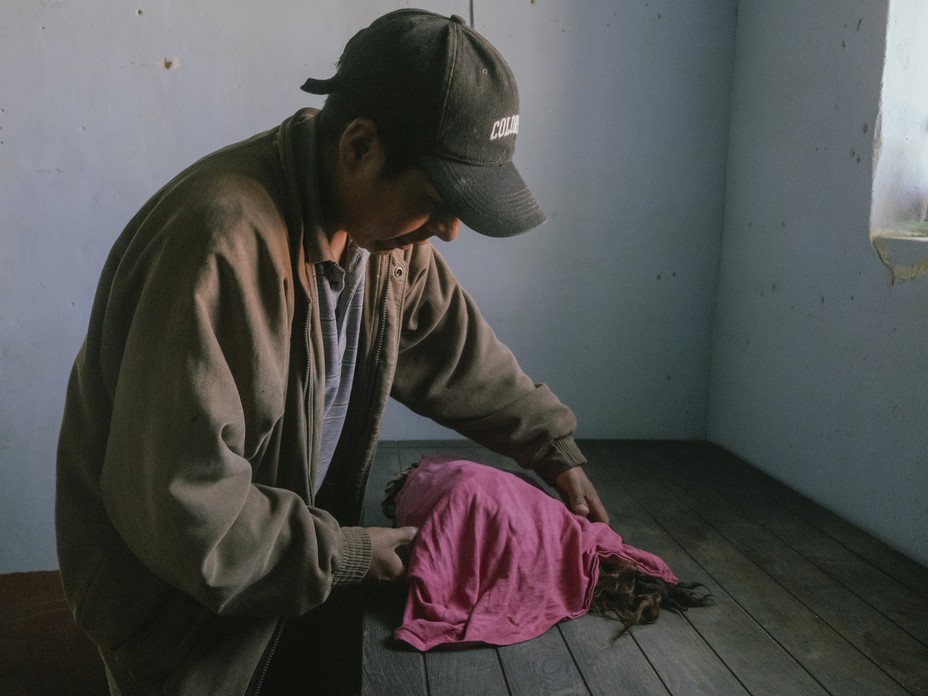
To guard the khipus, Hyland had deliberate to wrap them in acid-free paper for storage. However she’d forgotten to pack any in her rush to depart Scotland, so it was on to Plan B. She rooted by means of her baggage and chosen two clear cotton T-shirts to sacrifice, one inexperienced, one purple. She swaddled among the longer khipus in these and packed them into cardboard packing containers for storage within the museum, to await her return subsequent yr. She was already excited to get again.
Since leaving Jucul, Hyland has bought an vintage wax doll, and he or she plans to fee a tiny silk robe so the city can show a reproduction of the goddess alongside the skulls and volleyball trophies within the museum. Even now, months later, she nonetheless can’t consider the luck she had in uncovering so many new khipus. “It seems like discovering a cave with the Useless Sea Scrolls,” she mentioned, “or coming into an untouched historic Egyptian tomb full of hieroglyphic inscriptions.”
Hyland and her colleagues may by no means decipher khipus totally, a lot much less resurrect the Inca equal of the psalms or Homer. However even just a few spare strains could be invaluable. Such phrases would give the individuals of Jucul and all through the Andes one thing that many people at this time merely take without any consideration—an opportunity to listen to their ancestors converse.
