



Dependable web entry might not be the very first thing that involves thoughts when you consider humanitarian responses. However, for the UN Refugee Company (UNHCR) and its companions responding to pressing wants at Musenyi refugee camp, connectivity is a vital enabler of their work.
Musenyi is positioned in Burundi, a small, landlocked nation in East Africa. In 2025, 1000’s of youngsters and households arrived at Musenyi looking for security and help, inserting strain on a web site that wasn’t constructed for that scale. Shelter, meals, and medical care had been among the many most pressing priorities, however none of it could possibly be coordinated successfully with restricted web connectivity.
With so many weak individuals relying on a coordinated, efficient response, UNHCR turned to its trusted partnership with Cisco Disaster Response (CCR) to work collectively on an answer.
A primary-of-its-kind deployment: Bringing industrial-grade Cisco know-how to Musenyi
When UNHCR’s Refugee Emergency Telecommunications Sector (RETS) workforce reached out to CCR in late March 2025, the ask was clear: design and deploy a community resolution for Musenyi that might join a number of websites throughout tough terrain and in harsh outside circumstances, with restricted present infrastructure to construct on. There was no underground fiber cabling, no dependable mobile sign, and no viable technique to run bodily cables throughout the terrain. The answer needed to work in circumstances that will defeat commonplace networking gear.
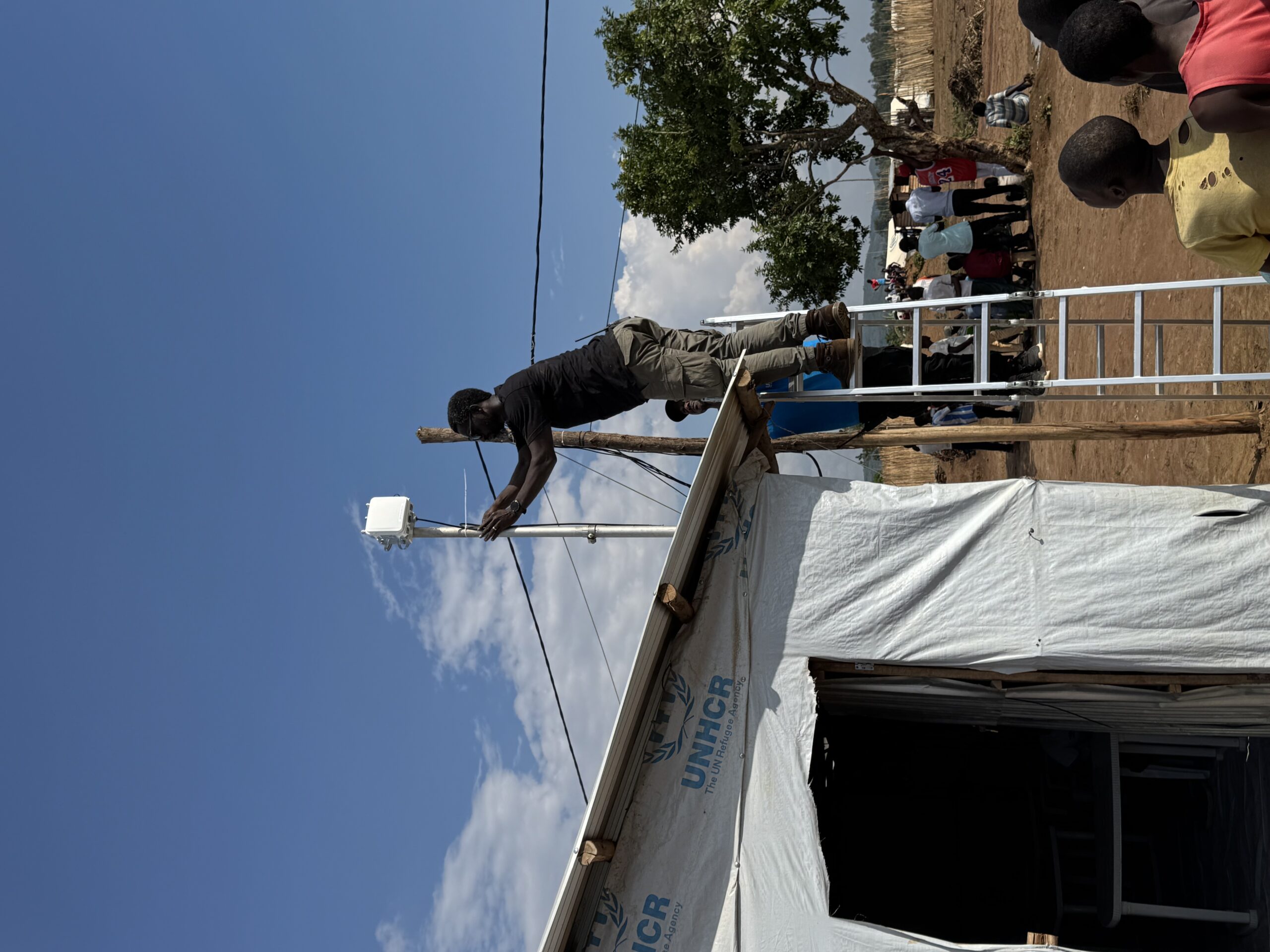
For the primary time, CCR deployed Cisco’s industrial-grade wi-fi know-how in an energetic humanitarian discipline operation — and the circumstances at Musenyi had been precisely what this gear was constructed for. Ruggedized to face up to warmth, mud, and rain, it created high-speed connections between websites as much as 1,000 ft aside with no single cable within the floor. A lot of it had been pre-configured earlier than the workforce left for Burundi, minimizing setup time on arrival.
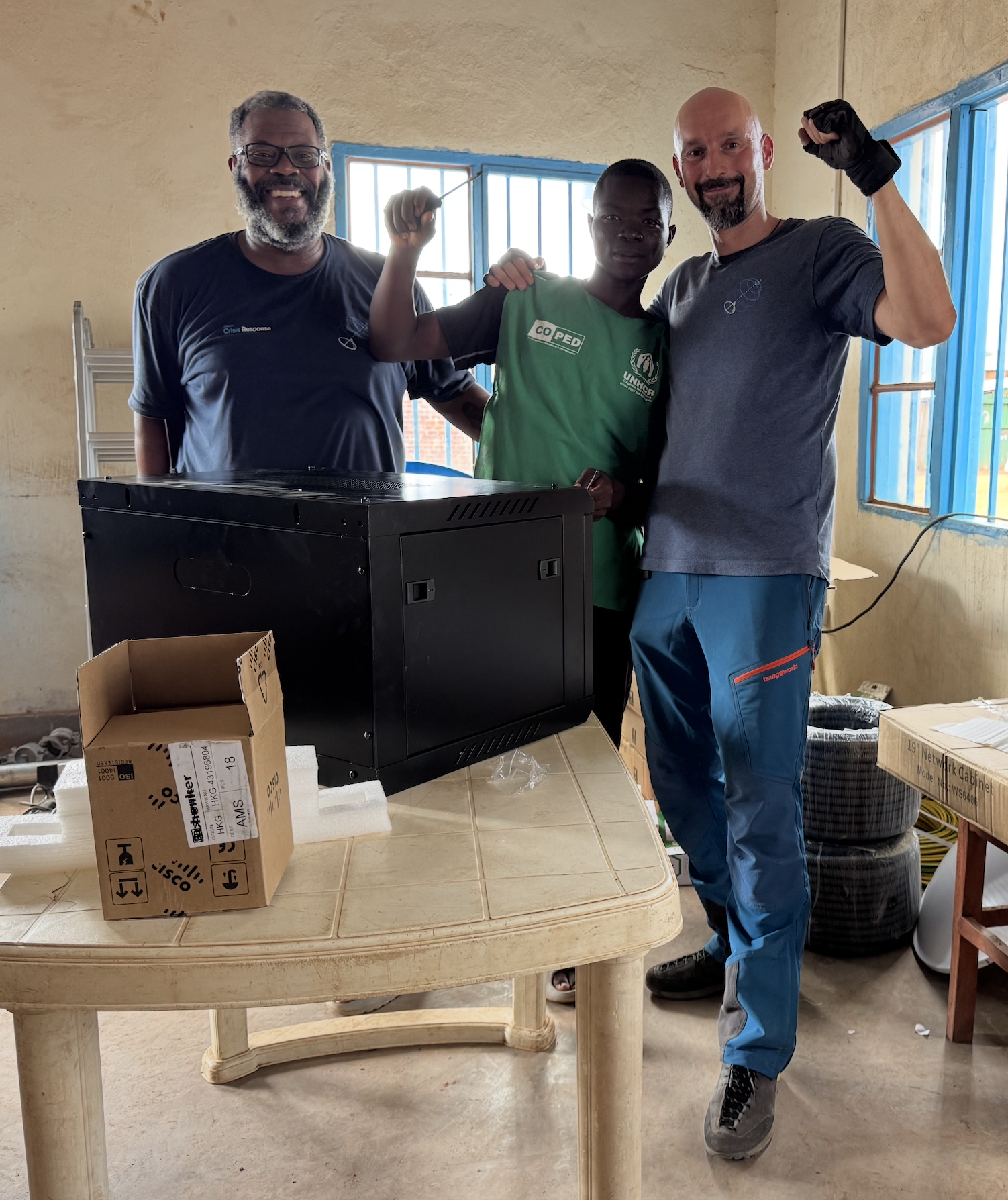
As soon as on the bottom, the CCR workforce labored intently with UNHCR’s native IT workers to improve Musenyi’s community and develop connectivity throughout the location, linking key services and enabling extra environment friendly coordination throughout aid companies.
“The very first thing we did once we received to Musenyi was place an antenna at elevation, so it may broadcast concurrently to a number of hubs throughout the location under,” explains Matt Altman, CCR’s technical chief in programs engineering. “The purpose-to-multipoint functionality was important right here, as a result of it meant we may join the well being heart, college, the primary operations heart, and services with out working a single bodily cable.”
From discipline operations to household calls: Placing the community to work
For humanitarian employees, dependable connectivity is vital to their day-to-day work. As soon as the upgraded wi-fi community was in place, Musenyi’s operations started to shift. UNHCR groups may register new arrivals extra effectively, whereas well being employees may seek the advice of with distant specialists to assist households get the medical care they want. UN companies and native companions may share real-time details about medical wants, meals distributions, and safety instances. Coordination throughout companies may occur extra simply over safe video calls, liberating up invaluable time and assets.
For the refugee and host neighborhood, the community opened a distinct sort of door. Musenyi’s two web connections — a microwave hyperlink and a low earth orbit satellite tv for pc — are allotted based mostly on time of day. Throughout enterprise hours, humanitarian employees have devoted bandwidth for every day operations whereas refugees use the opposite connection; at evening, automated scripts reconfigure the community, rendering the total capability of each connections obtainable to the neighborhood to allow them to entry data and join with family members.
Underpinning all of it’s a safety structure designed to maintain delicate data protected with out limiting entry for individuals who want it. Cisco Id Providers Engine (ISE) offers UNHCR’s IT workforce exact management over who can entry what: accomplice NGOs onboard via a self-service portal, and delicate programs — corresponding to refugee registration information, safety case recordsdata, and medical data — stay protected all through. Cisco SecureConnect layers DNS filtering, firewall safety, and internet safety throughout all customers, defending each humanitarian operations and the refugee neighborhood from on-line threats. And with Cisco Meraki’s cloud-managed dashboard, CCR engineers can monitor community well being and resolve points remotely, whereas native UNHCR IT workers skilled in the course of the deployment deal with day-to-day administration on the bottom.
“When outfitted with the appropriate know-how, humanitarian groups can deal with supporting households and managing pressing wants,” says Kevin Murphy, CCR operations supervisor.
“Finally, our objective is to supply the location managers with the instruments and coaching they should keep environment friendly, related, and safe. It’s rewarding to see our options assist others ship help extra successfully and join communities that had been beforehand out of attain.” — Kevin Murphy, CCR operations supervisor
The funding in infrastructure and hands-on coaching put Musenyi in a stronger place to deal with no matter got here subsequent. When extra households arrived within the following months, UNHCR and companions had been higher outfitted to reply. To maintain tempo with the location’s evolving wants, we additionally shipped Cisco-donated gear from UNHCR’s emergency stockpile in Geneva to Burundi whereas persevering with to obtain extra supplies and coordinate a follow-up deployment.
Past the bandwidth: The human affect of connectivity throughout instances of disaster
The progress at Musenyi is an indication of what’s attainable when the appropriate know-how meets the appropriate partnership, and what which means for the 1000’s of individuals relying on each. UNHCR’s operational experience paired with Cisco’s know-how and technical capabilities meant that the workforce was capable of co‑design an answer that was match for the context and the individuals it’s meant to serve.
From the humanitarian employee who can pull up a case file in moments somewhat than looking via stacks of paper data, to the household separated throughout borders who can lastly see one another’s faces on a display: dependable connectivity modifications what’s attainable in a disaster.
For Altman, this work isn’t merely about offering web service. “We’re giving humanitarian employees the instruments to do their jobs extra successfully whereas giving people who find themselves enduring unimaginable hardship the power to take care of connections to household, to entry data, to have a voice,” he displays. “It’s a reminder that probably the most significant issues we will do with Cisco know-how is to ensure — even in instances of disaster when all the pieces else is unsure — that assist, hope, and human connection are all the time inside attain.”
