



Music, gentle, and digital therapies present promise as safer options to dangerous drugs in easing dementia-related agitation, providing a possible path for some sufferers and caregivers alike.
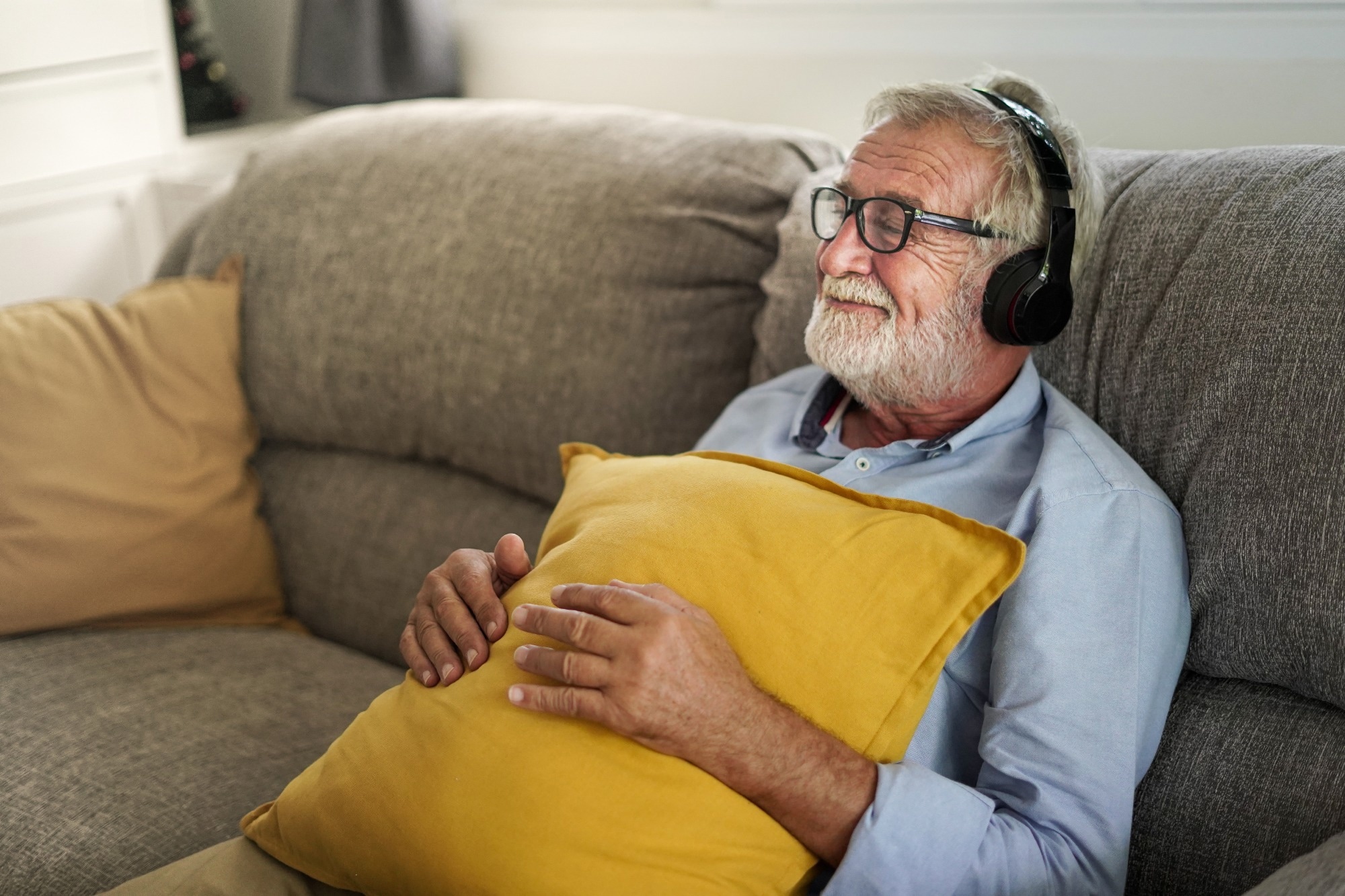
Story: Remedy of agitation in dementia – a scientific evaluation. Picture credit score: RasaSopittakamol/Shutterstock.com
Tens of millions of individuals endure from dementia situations like Alzheimer’s illness. The prevalence of hysteria and misery typically complicates their care. A scientific evaluation revealed within the Worldwide Journal of Emergency Medication assessed the efficacy and security of present drug and non-drug interventions for agitated sufferers with dementia.
Introduction
Dementia, together with Alzheimer’s illness, impacts over 55 million folks worldwide, with practically 10 million new instances annually. Sufferers with dementia might shout, complain, tempo about, or turn into violent. These verbal and bodily outbursts make the job of a caregiver extra sophisticated.
Along with inflicting stress, agitated dementia sufferers usually tend to have higher healthcare wants, leading to some needing to be dedicated to full-time care in well being amenities. Managing agitation would enormously profit sufferers and their caregivers.
Traditionally, dementia sufferers had been handled primarily by bodily restraint, typically inside establishments. Later, interventions reminiscent of hydrotherapy and sedatives had been launched, although these had been typically ineffective.
Psychotropic drugs have been used to handle agitation. Nonetheless, they produce deep sedation and improve the chance of sickness and generally demise.
As scientists started to know extra concerning the cognitive facets of dementia, behavioral therapies, cognitive stimulation, and environmental stimuli had been utilized in remedy. Cholinesterase inhibitors may also be used to cut back cognitive signs.
This systematic evaluation analyzed 9 medical research: three targeted on pharmacological interventions (brexpiprazole, mirtazapine, and an escitalopram trial with no consequence information), and 6 on non-pharmacological therapies reminiscent of music remedy, gentle remedy, digital care applications, and high-frequency repetitive transcranial magnetic stimulation (rTMS) mixed with cognitive coaching.
Findings point out that brexpiprazole demonstrated dose-dependent enhancements in agitation, whereas mirtazapine confirmed no vital profit and was related to elevated mortality. One medicine research (on escitalopram) was included as context however didn’t present outcomes.
Research findings
The evaluation included 9 medical research, three specializing in drugs and the others on non-medication therapies. The outcomes recommend that brexpiprazole improves agitation however not mirtazapine, which will increase the mortality threat. One of many three medicine research was a research design with out consequence information and was due to this fact included for contextual relevance, however it didn’t contribute any outcomes.
“These findings replicate a broader problem in dementia analysis: the restricted efficacy of medicines that primarily deal with signs fairly than underlying illness mechanisms.”
At current, most dementia sufferers with agitation are handled utilizing antipsychotics, antidepressants, and different psychiatric drugs. Nonetheless, antipsychotics can improve the chance of cardiovascular occasions and demise, highlighting the necessity for safer and more practical options.
Non-drug choices embrace light-based, music, and digital care applications. These stimulate numerous bodily senses that might result in improved temper. The social interplay required for these therapies additionally promotes higher habits.
Amongst non-drug therapies, music diminished agitation in virtually all areas. Audiobooks had some calming results in sure areas however had been related to elevated agitation over time in others, significantly within the subscale of non-staff-directed bodily agitation. This means that each the kind and length of auditory intervention are essential to contemplate.
Customized music interventions had been proven to cut back verbally agitated behaviors and improve pleasure, with out rising bodily agitation or unfavorable feelings. Using repetitive transcranial magnetic stimulation (rTMS) mixed with cognitive behavioral remedy diminished all neuropsychiatric signs, together with agitation, inside simply 4 weeks.
Customized gentle remedy has been proven to enhance habits, sleep, and temper in sufferers with dementia. This agrees with earlier analysis on misaligned organic clocks in dementia sufferers, emphasizing the function of environmental modifications in lowering neuropsychiatric signs.
Such remedy applications require the caregiver to be concerned and are sometimes expensive, limiting their accessibility. Variability in remedy response, influenced by genetic, life-style, and environmental elements, highlights the necessity for customized approaches.
Digital care applications such because the Wellbeing and Well being for Individuals Residing with Dementia (iWHELD) program had been additionally useful through the current coronavirus illness 2019 (COVID-19) pandemic. This free initiative goals to help and help care residence employees in caring for such sufferers by making certain they obtain human interplay and customized care. The iWHELD program decreased the usage of psychotropic drugs with out worsening agitation.
Analysis stays a problem, with many sufferers recognized solely at superior phases when remedy is much less efficient. Present diagnostic instruments might be invasive and expensive, additional delaying intervention.
Future instructions
At present, medication to get rid of dementia-associated beta-amyloid plaques and tau tangles are being developed to forestall dementia itself. Gene remedy is one other probably sensible method, concentrating on dementia-associated mutations.
Digital actuality (VR) and brain-computer interfaces (BCI) are different fields of analysis utilizing superior applied sciences to enhance cognitive expertise and facilitate higher social engagement.
Conclusions
Whereas some drugs are sometimes efficient, they might pose higher security dangers than non-drug approaches, which provide vital efficacy advantages and enhance the standard of life. Optimum administration might require combining pharmacological and non-pharmacological methods, tailor-made to particular person wants.
This research highlights the significance of customized care for people with dementia. Particular person affected person preferences can alter the sufferers’ remedy effectivity and high quality of life.
Whereas analysis is ongoing into drug and non-drug therapeutic choices, this evaluation underscores the worth of built-in and holistic care combining each approaches. Preventative methods, together with early detection and life-style modifications, additionally maintain promise however require additional investigation.
Obtain your PDF copy now!
