



TL;DR: Enjoyable is a organic necessity that reduces stress, boosts creativity, and strengthens social bonds. It’s not a distraction from wellness — it’s the gasoline that powers cognitive flexibility and emotional resilience.
 Bear in mind when enjoyable used to occur naturally?
As children, we didn’t schedule it, optimize it, or really feel responsible about it. We performed video games within the driveway till the streetlights got here on and laughed at ridiculous issues. We explored, created, and tried new experiences just because they sounded cool.
Someplace between maturity, tasks, and countless to-do lists, many people quietly stopped treating enjoyable like an necessary a part of life. As a substitute, it turned one thing additional. One thing you earn solely after the work is finished or one thing that belongs on a trip day when life calms down. Enjoyable turned non-obligatory as a result of our tradition started prioritizing productiveness and problem-fixing over the real pleasure and play that really help our psychological well being.
For a lot of adults, life has became a cycle of productiveness, restoration, and repetition. Get up. Work. Deal with tasks. Attempt to relaxation. Repeat. Even our well-being conversations focus virtually fully on fixing issues like burnout, sleep struggles, and exhaustion. Whereas these are very important subjects, there’s usually one thing lacking from the dialog: actual moments of enjoyment, connection, and curiosity.
Curiously, analysis continues exhibiting that these moments of enjoyable might matter much more for our resilience and psychological wellbeing than we understand.
The Science Behind Enjoyable
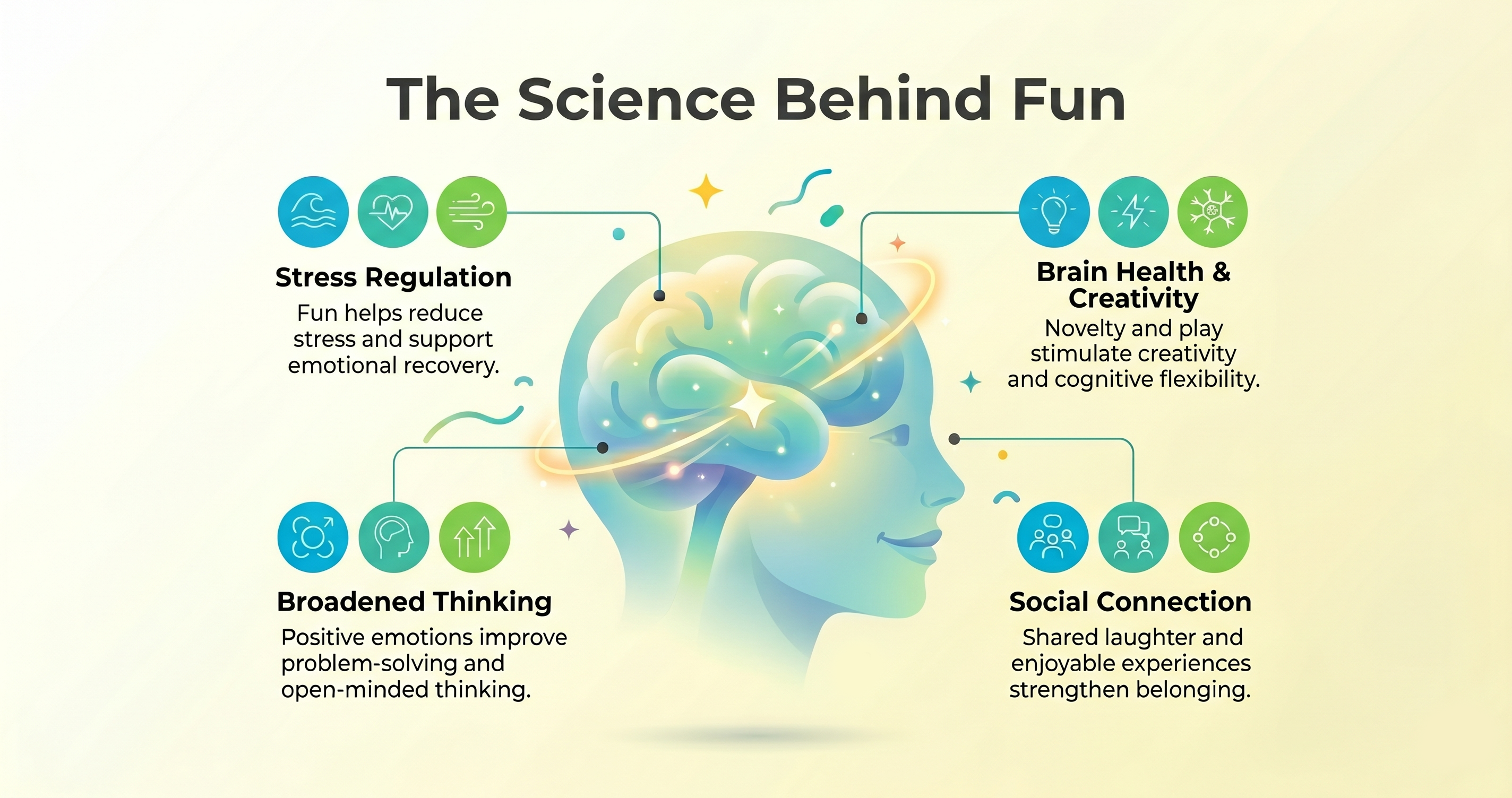
Enjoyable is not simply “fluff.” It really adjustments your mind chemistry in ways in which make you more practical at life. Once we interact in issues we take pleasure in, our our bodies launch a cocktail of feel-good hormones like dopamine and endorphins.
However the science goes deeper than only a momentary chemical rush.
Psychologist Barbara Fredrickson’s Broaden-and-Construct Concept gives probably the most compelling frameworks for understanding why pleasure issues. The idea proposes that optimistic feelings — together with pleasure, curiosity, curiosity, and amusement — actually broaden our cognitive and behavioral repertoire.
Once we really feel good, we don’t simply “really feel higher.” We really:
- See extra choices: Our peripheral imaginative and prescient and cognitive scope develop.
- Suppose extra flexibly: We’re higher at connecting unrelated concepts and fixing advanced issues.
- Take inventive dangers: Pleasure creates the urge to play and push limits, which is important for innovation.
Distinction that with persistent stress or emotional flatness. Beneath stress, our considering narrows. We concentrate on instant survival and placing out fires somewhat than long-term problem-solving. Constructive and adverse emotional states don’t simply really feel totally different; they produce fully totally different cognitive outputs.
Why Adults Battle to Prioritize Pleasure
If enjoyable is so good for us, why can we deal with it like a chore?
Most of us reside in a productiveness tradition that tells us each minute of the day must be “optimized.” We really feel responsible for resting if we have not checked sufficient gadgets off our to-do record. We begin to consider that enjoyable needs to be earned, resulting in a cycle the place we solely enable ourselves to take pleasure in life once we are already too exhausted to actually respect it.
This burnout mentality makes us view play as unproductive. We get so caught up in self-improvement— studying the fitting books, doing the fitting exercises, consuming the fitting meals — that we neglect to do issues simply because we like them.
There’s additionally guilt.
A shocking variety of adults really feel uncomfortable doing one thing that serves no sensible goal. They instinctively ask:
- Shouldn’t I be doing one thing extra helpful?
- Have I earned this but?
- Is that this a waste of time?
However always delaying pleasure creates its personal penalties.
A life that comprises solely obligation finally begins to really feel emotionally flat. And workplaces constructed fully round effectivity usually find yourself draining the very creativity and power they depend upon.
What Enjoyable Really Seems Like
We regularly confuse enjoyable with leisure or distraction, however they don’t seem to be the identical factor. Scrolling by way of social media for an hour would possibly really feel like a break, but it surely hardly ever leaves us feeling revitalized.
True enjoyable often requires a degree of lively engagement or curiosity. It’s the distinction between watching a journey present and truly wandering by way of a neighborhood farmers’ market. To reclaim your pleasure, it helps to appreciate that enjoyable would not require a excessive price ticket or a large time dedication.
Actual-life enjoyable usually seems like:
- Low-Stakes Curiosity: Spending twenty minutes falling down a “Wikipedia rabbit gap” a couple of subject that has nothing to do together with your job.
- Shared Levity: That particular sort of laughter that solely occurs once you and a teammate discover the identical absurd factor hilarious.
- The Movement State: Getting so misplaced in a inventive passion — whether or not it’s gardening, coloring for enjoyable or cooking — that you just briefly lose monitor of time.
- Unstructured Exploration: Selecting to take the scenic route dwelling simply to see what a unique neighborhood seems like.
Why This Issues at Work
For HR and wellbeing leaders, the enjoyable issue is a severe enterprise metric. People should not machines. We are able to’t simply run on high-pressure output mode indefinitely.
When organizations make investments solely in stress administration, they’re usually treating the signs with out wanting on the tradition. A office the place pleasure feels inconceivable is a office the place burnout is inevitable.
Creativity and engagement are fueled by optimistic feelings. Groups that chuckle collectively and expertise moments of levity are extra resilient when challenges come up. Sustainable efficiency requires emotional variation — we’d like the highs of shared success and the lightness of play to stability out the heavy lifting of our each day roles.
In his analysis on The Enjoyable Behavior, Mike Rucker warns that pressured enjoyable tends to backfire when organizations attempt to manufacture enjoyment with out first creating belief and psychological security.
Workers don’t want obligatory enjoyable. They need cultures the place being human is allowed.
That may seem like:
- Extra flexibility and respiratory room
- Leaders modeling wholesome conduct
- Area for casual connection
- Artistic autonomy
- Recognition that restoration helps efficiency
- Workdays designed with precise human power in thoughts
Integrating Enjoyable Into the On a regular basis
Reclaiming your pleasure doesn’t require a trip, a wonderfully balanced schedule, or an entire life overhaul. Extra usually, it begins with small shifts in how we take into consideration enjoyable.
Listed here are just a few easy methods to deliver extra enjoyable into on a regular basis life:
- Schedule “Play” Earlier than Exhaustion Hits: We regularly depart our hobbies for the very finish of the day when our power is at zero. Attempt scheduling quarter-hour of one thing you really take pleasure in for a Tuesday morning or a Thursday lunch break. By doing it once you nonetheless have power, you really get to expertise the enjoyment of it.
- Inject Novelty Into the Mundane: Routine is the enemy of enjoyable. You may spark micro-joy just by altering the way you carry out your each day duties. Swap your standard espresso for a brand new seasonal mix, take your laptop computer to a park for an hour, or hearken to a comedy podcast as a substitute of the information throughout your commute.
- Defend Your Hobbies Like a Assembly: Your pursuits should not additional. They’re important upkeep on your mind. Whether or not it’s constructing a LEGO set, gardening, studying the newest thriller or portray, deal with that point with the identical respect you give a piece assembly. If somebody asks for that point, inform them you’ve a previous dedication — since you do.
- Take a Micro-Journey: You do not want a airplane ticket to discover. Discover one small factor every week that appears like an occasion. Go to that bizarre vintage store you all the time drive previous, strive the brand new bakery three cities over, or stroll a path you’ve by no means been on. These small shifts in atmosphere sign to your mind that life is greater than only a collection of duties.
- Create Unstructured Social Moments: Cease making an attempt to program each social interplay with a proper dinner or a structured exercise. Generally the most effective enjoyable occurs within the gaps — the 5 minutes of joking earlier than a gathering begins or a fast, unplanned stroll with a neighbor. Let go of the agenda and simply let the dialog wander.
Let Enjoyable Rely
It’s straightforward to dismiss small moments of pleasure as foolish or unimportant when in comparison with the gravity of our skilled and private tasks. However these moments are precisely what construct a life that feels price residing. They’re the shock absorbers for the bumps within the highway and the sparks that maintain our inventive fires burning.
We’ve got to cease ready for the right time to take pleasure in ourselves. Life isn’t going to be calm sufficient, the to-do record isn’t going to be actually empty, and there’ll all the time be a brand new drawback to resolve. If we look ahead to the absence of stress to have enjoyable, we is likely to be ready perpetually.
Reclaiming your pleasure begins with a easy selection: deciding that having time is a sound use of your time. Begin small. Select curiosity over effectivity. Let your self chuckle on the ridiculous. Most significantly, let the enjoyable depend, even when it’s small. Your mind, your physique, and your staff can be higher for it.

